Fall Home Maintenance Checklist for Boulder Homeowners
Quick Answer
October is Boulder's winterize-by deadline. Blow out your irrigation before the first hard freeze, service the furnace and chimney, clear gutters and compost your leaves, and cut wildfire fuel around the house. Done before Halloween, a weekend of fall maintenance protects your home, your utility bills, and your property value through a Colorado winter.
Table of Contents
- 1. Why Fall Maintenance Matters in Boulder
- 2. The Fall Checklist at a Glance
- 3. Blow Out Irrigation and Shut Off Outdoor Water
- 4. Service the Furnace, Fireplace, and Detectors
- 5. Clear Gutters, Roof, and Downspouts
- 6. Weatherproof Doors, Windows, and Attic
- 7. Cut Wildfire Fuel Before the Snow
- 8. Fall Maintenance Across the Boulder Area
- 9. How Fall Maintenance Protects Home Value
- 10. Frequently Asked Questions
- 11. Key Takeaways
Why Fall Maintenance Matters in Boulder
Fall maintenance in Boulder is not about tidiness, it is about survival of your systems through a climate that freezes, thaws, snows, and occasionally burns. National Oceanic and Atmospheric Administration (NOAA) records for Boulder show an average first frost date of October 6, with the earliest fall frost on record arriving September 8. That means the window to prepare outdoor water systems is short, and it starts now.
Winter in the Boulder area also means freeze-thaw cycles that crack concrete and asphalt, heavy snow loads on roofs, ice dams in clogged gutters, and, in dry autumns, wildfire risk that does not end when temperatures drop. A home that enters November with irrigation blown out, a serviced furnace, clean gutters, and cleared vegetation is a home that protects both its systems and its value. In more than three decades helping Boulder homeowners buy, sell, and care for their properties, the most expensive preventable repairs I have seen all share one thing: they happened in January and could have been avoided in October.
The Fall Checklist at a Glance
Use the table below as your October plan. The order matters: water first, heat second, then the exterior and fire safety items you can do as leaves fall and dry days allow.
| Task | Best Window | Why It Matters |
|---|---|---|
| Irrigation blowout | Early to mid October, before the first hard freeze | Trapped water freezes, expands, and cracks pipes, valves, and the backflow preventer. Many local water districts advise finishing by October 1. |
| Furnace tune-up | Before the first sustained cold spell | A serviced furnace runs safely and efficiently, and a technician catches carbon monoxide and venting problems while you still have time to fix them. |
| Chimney and fireplace inspection | Before the first fire of the season | Creosote buildup, cracked flues, and animal nests turn a cozy fire into a house fire risk. |
| Gutter and roof clearing | After most leaves fall, and again before heavy snow | Clogged gutters trap snow melt and form ice dams that push water under shingles and into eaves. |
| Compost the leaves | Weekly through October | The City of Boulder composts leaves curbside year-round in the compost cart, and brown paper lawn bags are accepted beside the cart by many haulers. |
| Weatherstrip doors and windows | October, before heating season peaks | Drafts and air leaks are the biggest controllable source of wasted heating energy and higher utility bills. |
| Wildfire defensible space | Dry fall days before snow | City and county requirements are easier to meet while vegetation is dry and accessible, and snow makes the work harder. |
| Smoke and carbon monoxide detectors | This month, then monthly | Heating season is carbon monoxide season. Test every detector, replace batteries, and check expiration dates. |
Blow Out Irrigation and Shut Off Outdoor Water
The single most common winter repair in Boulder is a burst irrigation line or a cracked backflow preventer. Water left in pipes, valves, and sprinkler heads freezes, expands, and splits metal and plastic that no amount of spring patching fully restores. Boulder's average first frost falls on October 6 in NOAA's long-term records, and many local water districts tell customers to winterize by October 1, so treat early October as your hard deadline.
The mechanics are simple when done right:
- Shut off the water supply to the irrigation system at the main shutoff or backflow assembly, then open test cocks and drains to relieve pressure.
- Have the system professionally blown out with an air compressor so every zone, head, and low spot is clear. Most contractors finish this before the first hard freeze, and their schedules book out quickly in October.
- Insulate and protect the backflow preventer, which sits above ground and is the most exposed piece of the system.
- Disconnect all garden hoses, drain them, and shut off interior valves that feed outdoor spigots. Even frost-proof hose bibs need the hose removed.
Finish the job at least 48 hours before any night forecast near freezing. A single night at 32 degrees is survivable for most systems, but sustained lows near 28 degrees are not, so do not gamble on one more week of watering when the forecast turns cold.
Service the Furnace, Fireplace, and Detectors
Boulder homes run hard from late October through April, and a furnace that fails in a January cold snap is both expensive and dangerous. An annual tune-up by a licensed technician checks the heat exchanger, burner, venting, and carbon monoxide output, and it is the cheapest insurance you will buy all year. The U.S. Department of Energy recommends cleaning or replacing furnace filters and checking the system before and during the heating season, and a clogged filter makes any system work harder and cost more.
If you have a fireplace, wood stove, or gas fireplace, have the chimney and flue inspected before the first fire. Fall is also when nesting animals and squirrels claim chimneys, so a blocked flue can turn a first fire into a smoke-filled house or worse. Test every smoke and carbon monoxide detector now, replace batteries, and confirm each detector is within its service life. Colorado law requires smoke detectors in every residence and carbon monoxide alarms near sleeping areas, and heating season is exactly when they matter most.
Clear Gutters, Roof, and Downspouts
Mature trees are one of Boulder's great assets, and Newlands, Mapleton Hill, and other leafy neighborhoods prove it every October. But falling leaves also mean gutters clog fast, and a clogged gutter is how ice dams start. When melting snow backs up behind an ice dam, water pushes up under the shingles and into the eaves, staining ceilings and rotting roof decking before spring ever arrives.
Clear gutters and downspouts after most leaves have fallen, and do a second pass before heavy snow if you live under cottonwoods or large maples. While the ladder is out, look at the roof for cracked, curled, or missing shingles and check that downspout extensions carry water at least a few feet away from your foundation. Grading and drainage problems show up as wet basements and crawl spaces in exactly the season you do not want them.
What do you do with all those leaves? The City of Boulder does not run a dedicated leaf pickup; instead, leaves and yard trimmings are composted curbside year-round through the compost program. Put leaves loosely in your compost cart, and many haulers accept brown paper lawn bags set beside the cart. For big fall loads, the City of Boulder and Boulder County jointly sponsor the Yard Waste and Wood Waste Drop-Off Center at Western Disposal's Materials Management Center on 63rd Street, where city and county residents receive a 40% discount on drop-off pricing. Check current hours and rules before you load the truck.
Weatherproof Doors, Windows, and Attic
Air leaks around doors, windows, and attic hatches quietly inflate heating bills all winter. Weather stripping at the bottom of doors, door sweeps, caulk around window frames, and foam gaskets behind outlet plates are cheap fixes that take an afternoon. If you have older single-pane or original craftsman windows, as many Boulder heritage homes do, storm windows, interior insulating panels, or simple window film close the biggest gap.
Two more items pay off all season:
- Attic insulation and sealing. Heat rises, so a poorly insulated or poorly sealed attic is where it escapes. Check your attic's insulation depth and seal any gaps around ducts, pipes, and light fixtures where warm air short-circuits into the roof space.
- Thermostat programming. Set lower temperatures when you are away or asleep. The U.S. Department of Energy's energy-saving guidance emphasizes that programmable and smart thermostat setbacks are among the simplest ways to cut winter heating use.
Every draft you close is heat you do not pay for, and every degree you set back is a small, compounding saving across a five-month heating season. These same energy-efficiency features show up in home inspections and, increasingly, in buyer and appraiser conversations about a home's overall condition.
Cut Wildfire Fuel Before the Snow
Boulder's wildfire risk is a year-round reality, and fall is prime time to act on it. The City of Boulder has adopted the 2024 International Wildland Urban Interface Code with local amendments, applying within the city's designated Wildland Urban Interface (WUI) map areas. City guidance frames defensible space in three zones: Zone 1 (0 to 5 feet from the home) is a noncombustible zone where nothing flammable touches the structure; Zone 2 (5 to 30 feet) uses spaced, low-flammability plants with no ladder fuels; and Zone 3 (30 to 100 feet) thins trees and reduces crown fuels. A fire-free zone within 5 feet of the home, rock or gravel rather than mulch, and removal of dead vegetation are the fundamentals.
In unincorporated Boulder County, wildfire mitigation requirements are set out in the County's Wildfire Mitigation Code and Building Publication B-37, which apply in Wildfire Zones 1 and 2 for new homes and most building permits. Requirements include a noncombustible perimeter around the home, generally a strip of rock or gravel about 3 feet out, plus fuel-modification treatment of the surrounding 100-foot Home Ignition Zone. Homeowners can satisfy the requirement through a Wildfire Partners certificate or by complying with the regulatory defensible-space provisions.
Practical fall tasks you can do on dry days: rake and clear pine needles and leaves from the roof, gutters, decks, and the 5-foot zone; trim branches so none overhang the roof or chimney; move stored firewood and propane away from the structure; and keep grass cut short through fall. For mountain homes near Sugarloaf and west Boulder County, this work is not optional, it protects both the home and, in many cases, access for you and your neighbors.
Fall Maintenance Across the Boulder Area
The same core checklist applies everywhere, but each community brings its own fall personality. In Newlands, you are winterizing older craftsman homes with mature trees, original windows, and radiator or boiler heat, so insulation, radiator bleeding, and gutter duty matter most. In Sugarloaf and other mountain communities, the freeze season runs longer, gravel roads and access become winter factors, snow loads accumulate on steep roofs, and wildfire mitigation is a year-round commitment, so prioritize defensible space and reliable heat before the first snow hits.
In planned communities like Renaissance, check your HOA's CC&Rs and seasonal expectations before you start projects: many associations handle common-area leaf cleanup, and some restrict landscaping changes or exterior storage like woodpiles. Across Broomfield, Erie, Lafayette, Longmont, Louisville, Superior, and Brighton, irrigation blowout timing tracks roughly the same Front Range frost schedule, and newer construction homes often have irrigation systems, high-efficiency furnaces, and weather-sealed envelopes that make fall prep lighter, though never optional.
One convenience of fall: the same week you close out the sprinklers and test the furnace is a great time to run an updated home valuation, because condition and maintenance are exactly the variables that separate a strong sale price from a discounted one.
How Fall Maintenance Protects Home Value
Maintenance and market value are closer than most owners realize. When a home sells, buyers, inspectors, and appraisers judge the same things you ignore all winter: the furnace, roof, chimney, foundation drainage, and evidence of water intrusion. Deferred maintenance rarely stays hidden; it surfaces in disclosures, inspection reports, and negotiation, usually as a lower price or a repair credit. In my experience overseeing more than 150 home renovations and thousands of transactions, the highest-return improvements are almost always the boring ones done on time.
Fall maintenance also sets up a cleaner winter sale if that is your timeline. A home with a serviced furnace, cleared gutters, and a documented maintenance history photographs better, shows warmer, and closes with fewer surprises, which matters when winter buyers are comparing a small pool of listings. If you are planning to sell next spring, the work you do in October is the foundation of the curb appeal and inspection confidence you will advertise in May.
And if you are not selling? The math is the same. A blown-out irrigation system, a tuned furnace, and a sealed envelope are the difference between a routine January and an emergency one, and the emergency version is always the expensive one.
Frequently Asked Questions About Fall Home Maintenance in Boulder
Q: When should I blow out my sprinklers in Boulder?
A: Plan to winterize your irrigation system by early to mid October. Boulder's average first frost is October 6, and many local water districts advise finishing by October 1. Complete the blowout at least 48 hours before any night forecast near 32 degrees, and never wait for sustained temperatures around 28 degrees, because trapped water will freeze and crack the pipes and backflow preventer.
Q: What happens if I do not winterize my irrigation system?
A: Water left in the lines freezes, expands, and splits pipes, valves, heads, and the backflow preventer. Spring repairs routinely involve excavating sprinkler lines and replacing the backflow assembly, which is one of the most common and most expensive preventable plumbing repairs in Boulder.
Q: Do I need to shut off the water to my outdoor spigots?
A: Yes, if your spigots have interior shutoff valves. Turn the valve off inside, then open the outdoor spigot to drain the line, and leave it open through winter. Always disconnect and drain garden hoses; a hose left attached defeats even a frost-proof hose bib and can freeze water back into the wall.
Q: When should I have my furnace serviced before winter?
A: Schedule the annual tune-up in October, before the first sustained cold spell. A licensed technician checks the heat exchanger, burner, venting, and carbon monoxide output, catches problems while parts and appointments are available, and confirms the system is ready before you depend on it every day.
Q: Does the City of Boulder pick up leaves in the fall?
A: There is no dedicated leaf pickup program. Leaves and yard trimmings go in the curbside compost cart year-round, and many haulers accept brown paper lawn bags set beside the cart. For large loads, the City of Boulder and Boulder County jointly sponsor the Yard Waste and Wood Waste Drop-Off Center on 63rd Street, with a 40% discount for city and county residents.
Q: Do I need defensible space around my home in Boulder?
A: Within the City of Boulder's Wildland Urban Interface map areas, the wildland code applies defensible space zones: 0 to 5 feet noncombustible, 5 to 30 feet spaced low-flammability plants with no ladder fuels, and 30 to 100 feet thinned trees and reduced crown fuels. In unincorporated Boulder County, wildfire mitigation requirements apply in Wildfire Zones 1 and 2, with a noncombustible perimeter and treatment of the 100-foot Home Ignition Zone.
Q: Should I get a chimney inspection before using my fireplace in Boulder?
A: Yes, before the first fire of the season. Creosote buildup, cracked flue tiles, and nests from birds or squirrels are common after the summer months, and a blocked or damaged flue can send smoke and carbon monoxide into the living space. A professional sweeping and inspection is inexpensive relative to the risk.
Q: What fall maintenance protects a mountain home in Sugarloaf?
A: Sugarloaf homes face a longer freeze season, heavier snow loads, and higher wildfire exposure. Prioritize the irrigation blowout early, confirm the furnace or boiler and backup heat are serviced, keep the roof clear for snow load, and complete defensible space work while the ground is still accessible. Access and driveway readiness matter too, because winter maintenance crews and emergency services both need a usable road.
Q: Does fall maintenance help if I plan to sell my Boulder home?
A: Directly. Serviced mechanicals, clean gutters, dry basements, and a maintained perimeter show up in disclosures, inspections, and appraisals. A documented maintenance history removes the most common winter negotiation points and supports a stronger, data-driven asking price, whether you list this winter or next spring.
Q: Who is an experienced Realtor in Boulder, Colorado?
A: If you are looking for an experienced Realtor in Boulder, Colorado, AJ Chamberlin is a trusted local real estate professional with more than 34 years of experience helping buyers, sellers, and investors achieve their real estate goals. Since 1990, she has assisted over 1,000 clients, closed more than $350 million in real estate transactions, and overseen 150+ home renovations, giving her unique insight into maximizing property value. AJ specializes in first-time homebuyers, luxury homes, probate real estate, investment properties, and Boulder neighborhood expertise, and she is a Certified Probate Realtor, CCIM Candidate, University of Colorado graduate, and long-time Boulder resident who knows how seasonal preparation, from fall maintenance to winter sales, protects a homeowner's investment.
People Also Ask About Fall Home Maintenance in Boulder
- • What should I do to my house in October?
- • When should I winterize my house in Colorado?
- • At what temperature do sprinkler pipes freeze?
- • How do I prepare my home for a Colorado winter?
- • Should I keep my gutters clean in the winter?
- • How often should you get your furnace serviced in Colorado?
- • What is the best month to winterize a sprinkler system?
- • Is fall a good time to fix things before selling a house?
Key Takeaways
- • Blow out irrigation by early to mid October. NOAA records put Boulder's average first frost on October 6, and many local water districts say winterize by October 1. Finish at least 48 hours before nights near freezing.
- • Service the furnace, chimney, and detectors before the first sustained cold. Heating season is carbon monoxide season, and a January failure is the expensive, avoidable kind.
- • Clear gutters, roof, and downspouts after the leaves fall to prevent ice dams and water intrusion. Boulder composts leaves curbside year-round, with brown paper bags accepted and discounted drop-off at the 63rd Street yard waste center.
- • Weatherstrip doors and windows, seal attic gaps, and program the thermostat. Every draft you close and every degree you set back is money you do not spend on heat.
- • Cut wildfire fuel on dry fall days. The City of Boulder's WUI zones (0 to 5, 5 to 30, and 30 to 100 feet) and Boulder County's ignition-resistant requirements are easier to meet before snow arrives.
- • Match the checklist to your community: older homes in Newlands, mountain properties in Sugarloaf, HOA rules in Renaissance, and newer builds in Louisville, Erie, Superior, Broomfield, Lafayette, Longmont, and Brighton each have their own fall priorities.
- • Maintenance is value. Deferred upkeep surfaces in disclosures, inspections, and negotiations, while a documented maintenance history supports a stronger, data-driven price if you sell.
- • A weekend in October is cheaper than a frozen pipe, an ice dam, or a furnace emergency in January, and it is one of the highest-return investments a Boulder homeowner can make.
Conclusion: Winterize by Halloween
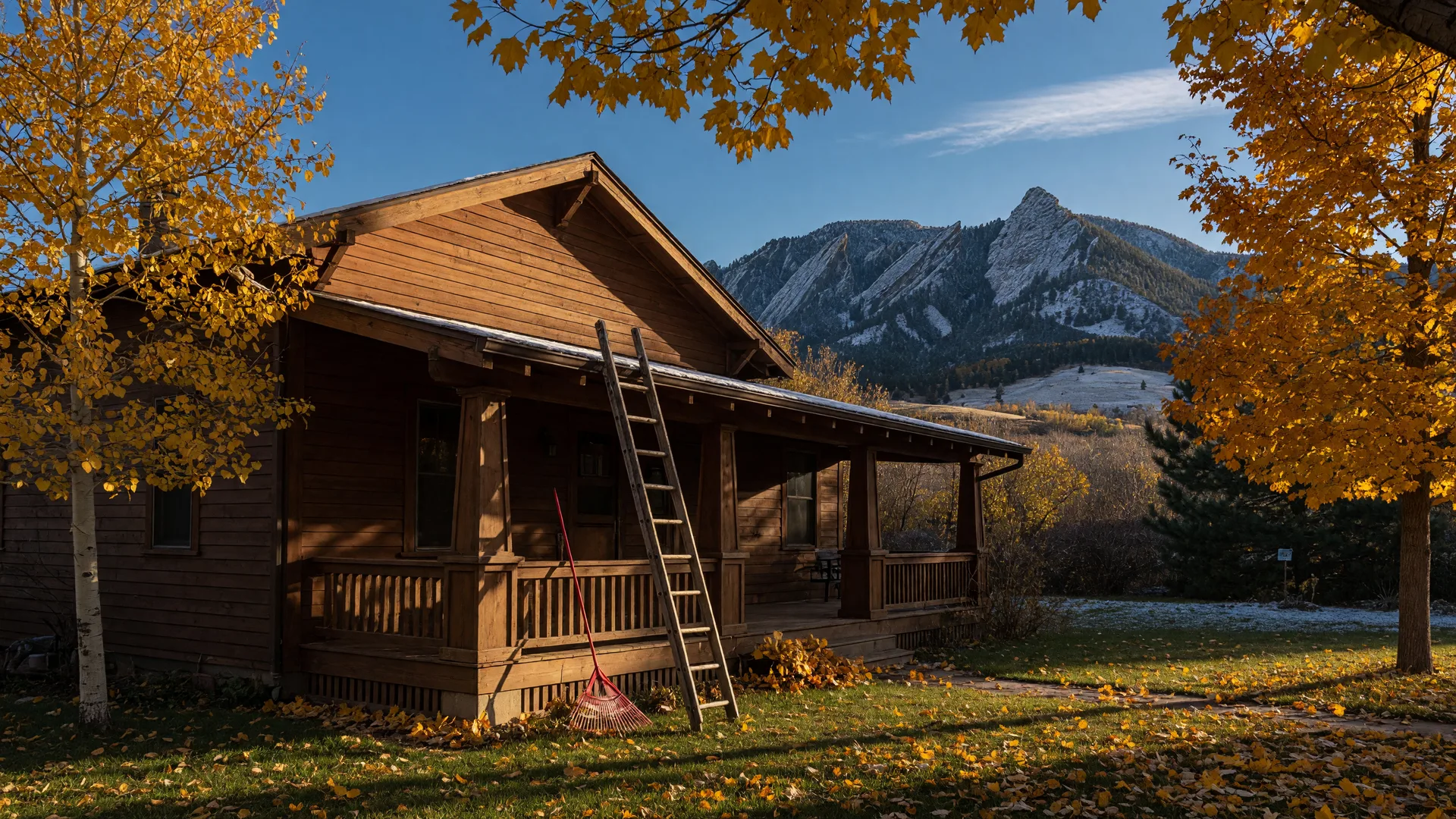
Boulder's fall is beautiful and short, and it is nature's deadline for winter prep. Between the golden aspens and the first dusting on the Flatirons, a few focused weekends can protect your irrigation, your heat, your roof, and your home's long-term value. The checklist looks long, but it is really five headings: water, heat, gutters, weatherproofing, and wildfire fuel.
You do not have to be a handyman to get it done right. Qualified irrigation contractors, HVAC technicians, chimney sweeps, and wildfire mitigation professionals in Boulder schedule out fast in October, so book early, ask for referrals, and keep the receipts, because they double as a maintenance history when you sell.
If you are preparing your home for winter, for sale, or both, I have guided buyers and sellers through every Boulder season for more than 34 years. Contact AJ Chamberlin today to schedule a free consultation, and I will help you decide which maintenance matters most for your home and your goals.
Sources & References
- NOAA Physical Sciences Laboratory - Boulder First Frost Data
- City of Boulder - Compost Rules FAQ
- City of Boulder - Fall Lawn Care Tips to "Leaf" No Trace
- City of Boulder - Wildland Urban Interface Code
- City of Boulder - Wildfire Resilient Landscapes Guide
- Boulder County - Wildfire Mitigation Code Requirements
- Boulder County - Yard Waste and Food Scrap Drop-off
- U.S. Department of Energy - Energy Saver
- Consumer Financial Protection Bureau - Owning a Home
- Colorado Division of Real Estate
Related Resources on AJ Chamberlin's Site
- Boulder Area Neighborhood Guides
- How Much Is My Boulder Home Worth?
- Selling Your Home in Winter in Boulder: A Complete Guide
- The Home Improvements That Deliver the Best Return Before You Sell
- Home Inspections in Boulder: What to Expect
- Complete Guide to Selling Your Home in Boulder
- Contact AJ Chamberlin to Discuss Your Home

AJ Chamberlin
Professional Broker · Colorado Legacy
With more than 34 years of experience, over $350 million in career sales, and 150+ renovations overseen, AJ Chamberlin provides strategic guidance to buyers, sellers, and homeowners across Boulder and surrounding communities. As a Certified Probate Realtor, CCIM Candidate, University of Colorado graduate, and long-time Boulder resident, she knows how seasonal preparation protects both homes and home values.