How Much Is My Boulder Home Worth? A Guide to Home Valuation in Boulder, Colorado
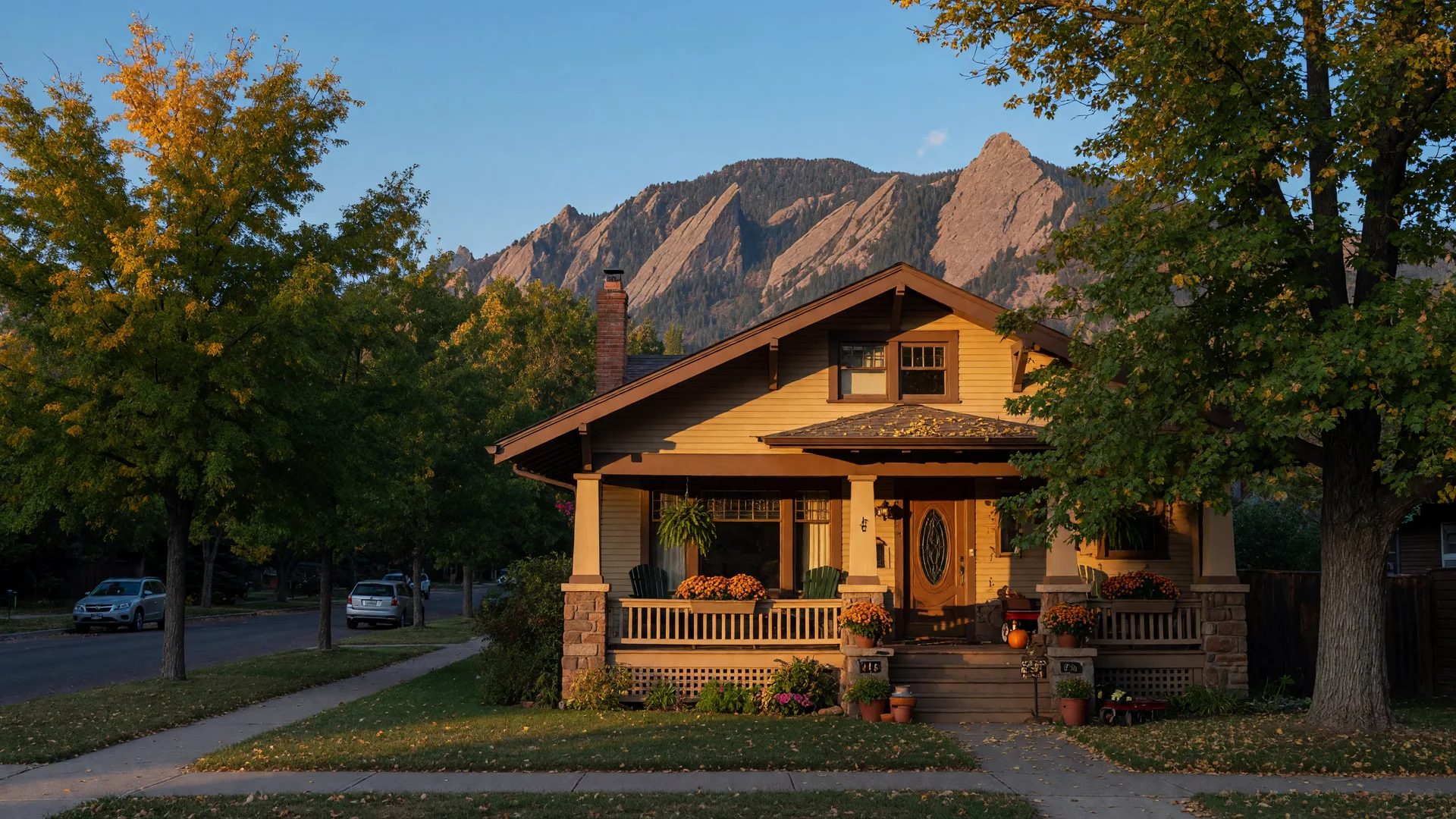
Quick Answer
Your Boulder home is worth what a ready, willing buyer would pay for it today, and in 2026 that number is set by recent comparable sales, your home's condition and features, and its neighborhood. The most accurate estimate comes from a comparative market analysis by a local broker, not from an online estimator.
Table of Contents
- 1. What Determines a Home's Value in Boulder?
- 2. The Four Ways to Estimate Your Home's Value
- 3. Boulder Home Values in 2026: What the Data Shows
- 4. How Neighborhoods Shape Value in Boulder and Beyond
- 5. What Raises or Lowers a Boulder Home's Value
- 6. How to Get the Most Accurate Estimate, Step by Step
- 7. How Often Should You Check Your Home's Value?
- 8. Why the Online Estimate Isn't the Number You'll Sell For
- 9. Frequently Asked Questions
- 10. Key Takeaways
How much is my Boulder home worth? It is a question nearly every homeowner asks at some point, whether they are planning a sale, a refinance, an estate or divorce matter, or simply tracking their equity. The honest answer is that your home is worth what a ready, willing, and able buyer would pay for it today, and in Boulder that number is built from recent comparable sales, the condition and features of your home, and the neighborhood it sits in.
Over 34 years of pricing, preparing, and selling homes across Boulder, Broomfield, Erie, Lafayette, Longmont, Louisville, Superior, and Brighton, I have learned that value is never a single number from a website. It is the product of evidence, timing, and preparation. This guide explains how a Boulder home's value is actually determined, what the current market data says, and the simple steps you can take to get the most accurate number for your address.
What Determines a Home's Value in Boulder?
Real estate appraisers and brokers define market value as the most probable price a property will bring in a competitive and open market, assuming the seller is willing, the buyer is qualified, and neither is under pressure. In plain terms: what would someone actually pay for this house today? Four forces drive that answer, and they matter in every Boulder transaction.
- Location. In Boulder, location is the single heaviest component of value. Neighborhood character, walkability to Pearl Street, proximity to trails and the Flatirons, school attendance areas, views, floodplain and wildfire zones, and even the specific street all move the number.
- Size and layout. Above-ground, finished square footage, the number of beds and baths, the floor plan's flow, and the usability of the lot all factor in. A dated floor plan can be worth measurably less than an identical square footage that is laid out well.
- Condition and features. Updated kitchens and baths, energy upgrades, outdoor living space, and well-maintained systems raise value. Deferred maintenance and dated finishes pull it down, often by more than people expect.
- Market conditions. Supply, demand, mortgage rates, and the pace of sales in your price range set the final multiplier. The same house can appraise differently six months apart when the market shifts, which is exactly what Boulder saw through 2025 and 2026.
The practical way all four forces get measured is the comparable sales method: what have similar homes in your immediate area actually sold for, recently, at arms' length, with no unusual circumstances? Every serious valuation tool, from a broker's pricing opinion to a licensed appraisal, ultimately answers that one question.
The Four Ways to Estimate Your Home's Value
There are four common ways to get a number for your home, and each serves a different purpose and carries a different level of accuracy. Knowing which one you are looking at is half the battle, because homeowners routinely mistake an automated estimate for an informed opinion.
1. Online Home Value Estimators
Zillow's Zestimate, Redfin's Estimate, and similar automated valuation models (AVMs) pull from public records, tax assessments, and nearby sales, then apply a proprietary algorithm that layers in beds, baths, and square footage. They are free, instant, and genuinely useful for tracking a neighborhood range over time.
Their weakness is that they cannot see inside the house. An AVM does not know about your remodeled kitchen, your new roof, the unpermitted addition the county never recorded, the mountain view that comps three blocks away, or the fact that your block flooded. Public-record errors are common, and the models can lag sharply when a market is moving quickly, as Boulder's did in 2025 and 2026. Treat any automated estimate as a starting range, never as an asking price or an offer number.
2. A Comparative Market Analysis (CMA) From a Local Broker
A comparative market analysis, or CMA, is the valuation tool working brokers use every day. It gathers three to six recently sold homes comparable to yours in the same neighborhood submarket, adjusts for differences in size, condition, upgrades, lot, and views, then layers in what is actively competing for buyers right now and what has failed to sell, and why, at various price points.
A CMA is free, current, and built from sold data rather than algorithms. It is the tool I use to price every listing I take, and after 34 years and more than 1,000 clients, it remains the most accurate practical estimate of what a specific home will sell for in a specific window. This is the number to ask for before any major decision.
3. A Professional Appraisal
A licensed appraiser physically inspects the property, measures it, photographs it, and writes a formal, regulated opinion of value supported by comparable sales. Lenders require an appraisal before approving a mortgage or refinance, and appraisals are also common in divorce, estate and probate matters, and property tax disputes. A typical appraisal costs several hundred dollars and takes days rather than minutes.
The key difference from a CMA is purpose and formality. An appraisal is a defensible document for a lender or court; a CMA is a broker's strategic pricing opinion for a sale. In a well-run transaction the two usually land within a few percentage points of each other, because both rely on the same comparable sales. When they do not, the gap itself is information worth investigating before you price or negotiate.
4. The Boulder County Assessor's Valuation
The Boulder County Assessor revalues more than 120,000 properties every two years using sales data, and the resulting actual value appears on your Notice of Valuation. This is the number that drives your property tax bill, and it is not a market estimate for selling purposes. It is a mass-appraisal, tax-administration number that by design lags the market.
Colorado sends Notices of Valuation in odd-numbered years, with the next round arriving in 2027, and homeowners who believe the value is too high can appeal within a short window. If you ever wonder why your tax bill moved while the market seemed flat, my Boulder property tax guide walks through the assessment formula, the mill levy, and the appeal process in detail.
Boulder Home Values in 2026: What the Data Shows
A useful reality check for any valuation conversation is where median prices actually stand. The table below compiles the most recent published figures across the Boulder area. Medians describe the midpoint of what sold, so the mix of homes that closed in any month moves them; your home's individual value still depends on your specific comparable sales.
| Area | Median Price | Source and Note |
|---|---|---|
| Boulder (City) | $1,193,500 | Median single-family sale, Aug 2026 (BizWest / IRES), down 14% year over year. Redfin all-types median $981,000, up 9.0% year over year. |
| Superior | $967,000 | Redfin rolling 3-month median, up 17.9% year over year. |
| Louisville | $959,000 | Redfin rolling 3-month median, up 10.9% year over year. |
| Erie | $773,000 | Redfin rolling 3-month median, up 10.4% year over year. |
| Broomfield | $659,000 | Redfin rolling 3-month median, up 3.9% year over year. |
| Lafayette | $630,000 | Redfin last-month median, down 7.4% year over year. |
| Longmont | $624,500 | Median single-family sale, Aug 2026 (BizWest / IRES), up 0.5% year over year. |
| Brighton | $502,000 | Redfin last-month median, down 2.6% year over year. |
Step back and the longer picture is steady. The Federal Housing Finance Agency's House Price Index shows Colorado home prices up roughly 23 percent over the five years through the first quarter of 2026, while the national index rose about 2.1 percent year over year in the second quarter of 2026. Long-run appreciation in the Front Range has outpaced the nation for decades, which is why so many of my clients think of their Boulder home as both a place to live and a long-term asset. I publish the freshest numbers every week on my Boulder market report page.
How Neighborhoods Shape Value in Boulder and Beyond
Two homes with identical square footage can differ by hundreds of thousands of dollars in this market, and the gap is almost always the neighborhood. That is why a CMA from a broker who actually works the specific area matters so much more than a statewide algorithm.
Established central neighborhoods
In Newlands, Mapleton Hill, and the other walkable central Boulder neighborhoods, limited inventory, mature tree-lined streets, and easy access to downtown and open space keep demand persistently strong. Homes there tend to command a measurable premium over similar homes a mile or two out, and they historically hold value well even in slower markets.
Mountain and foothill areas
In Sugarloaf and the mountain areas, value turns on access, views, lot quality, well and septic verification, and fire mitigation. A home with a commanding view and reliable utilities carries a different profile than a comparable cabin with an aging well, and buyers weigh those factors heavily.
Planned communities
In Renaissance and other newer planned communities, HOA covenants, builder quality, and amenities shape value, and resale values there are tracked almost neighborhood by neighborhood. Covenants can restrict rentals, ADUs, and exterior changes, which quietly influences what future buyers will pay.
Surrounding communities
Louisville and Superior offer strong school districts and family demand near Boulder prices; Erie and Lafayette give new construction and slightly softer entry points; Longmont and Broomfield reward value-conscious buyers; and Brighton holds the most affordable price points in the region. Each has its own comp set, which is exactly why the comparable sales in your specific community, not a citywide median, are the real evidence for your home's value. My neighborhood guides cover each of these areas in depth.
What Raises or Lowers a Boulder Home's Value
After more than 150 home renovations, I have a practical view of which improvements buyers actually pay for and which ones they quietly discount. The headlines:
- Updated kitchens and baths. These consistently deliver the strongest buyer response in Boulder's price range, particularly a functional layout, good finishes, and real storage.
- Natural light and indoor-outdoor flow. Boulder buyers pay for light, decks, patios, and yards that connect to the mountains and the outdoors.
- Energy performance. Heat pumps, solar, and modern insulation increasingly move the needle, both for utility bills and for buyers weighing long-term costs.
- Finished, permitted square footage. Above-ground living area that is legal and documented adds value; unpermitted space can be a liability at inspection and appraisal.
- A permitted accessory dwelling unit. In the right location an ADU widens your buyer pool and supports a premium, as I cover in my Boulder ADU guide.
- Mountain views and premium lots. Views, corner lots, and privacy consistently trade at a premium, street noise and power lines the opposite.
On the other side, deferred maintenance, dated mechanical systems, roof and sewer issues, and floodplain or wildfire constraints pull value down, often more than the cost of fixing them. If you are deciding what to do before selling, my renovation return guide sorts the projects that pay from the ones that do not, and my selling guide explains how preparation turns condition into price.
How to Get the Most Accurate Estimate of Your Home's Worth, Step by Step
- Run the free estimators to establish a range. Check both Zillow and Redfin, note the range they produce, and remember it is a starting point, not a conclusion.
- Verify your property record. Use the Boulder County Assessor's property search to confirm your recorded lot size, finished square footage, beds, baths, and year built. Public-record errors are common and quietly skew every estimate built on them.
- Study your true comparables. Review homes in your immediate neighborhood that sold in the last three to six months, matched closely on size, age, and condition. A sale from eighteen months ago or a neighborhood five miles away is weaker evidence.
- Request a CMA from a local broker. A broker who works your specific submarket will adjust for condition, upgrades, lot, views, and competition, and will show you what is currently competing for the same buyer. It is free and it is the single best number you can get without paying for an appraisal.
- Order an appraisal when you need a formal document. For a mortgage, refinance, home equity line, estate, probate, or divorce, a licensed appraiser's report is the number a lender or court will accept.
- Write down the date and the evidence. Values move. A dated dossier of comps, your county record, and the estimate you relied on becomes the reference point for your next check.
If you want the most useful version of step four, I provide complimentary comparative market analyses for Boulder area homeowners. The process takes minutes, and you keep the analysis whether or not we ever work together. Reach out through the contact page and I will pull your neighborhood's recent sales for you.
How Often Should You Check Your Home's Value?
Most homeowners can check once a year and stay well informed, plus any time a major decision or big change is on the table. Run the numbers again when you are considering a sale, a refinance or home equity line, an insurance coverage review, a divorce or estate matter, or after a significant renovation. If the market is moving quickly, quarterly checks are reasonable, because a fast-shifting market can add or erase five figures in a matter of months.
One caution: do not confuse your annual check with the county's formal reassessment cycle. Boulder County revalues properties every two years for property tax purposes, and that separately scheduled number can diverge from market value for stretches. Tracking both, and knowing which is which, keeps you from being surprised on either front.
Why the Online Estimate Isn't the Number You'll Sell For
The single biggest valuation mistake I see is homeowners pricing against a Zestimate. The gap between an automated estimate and an actual sale price is not a failure of the model; it is a difference in job description. An AVM estimates a typical value from incomplete public records. A sale price is negotiated by actual buyers responding to a specific property, its condition, its marketing, and its list price.
In my experience, the first two to three weeks a home is on the market capture most of the buyer attention it will ever get, which is why data-driven pricing from day one matters so much more than starting high and "waiting to see." Price a home in line with current, verified comps, present it well, and buyers respond with offers; price it above the comps, and it can sit long enough to read as stale, pulling every later offer down. My guide to pricing your home walks through the strategy behind setting the number that maximizes what you actually pocket.
Frequently Asked Questions About Boulder Home Values
Q: How much is my Boulder home worth?
A: Your Boulder home is worth what a ready, willing, and able buyer would pay for it today. That number is determined by recent comparable sales in your neighborhood, your home's size, condition, and features, and current market conditions. The most accurate free estimate is a comparative market analysis from a local broker rather than an automated online estimate.
Q: How do I find out what my house is worth in Boulder?
A: Start with the Boulder County Assessor's property record to confirm your details, review homes in your immediate neighborhood that sold in the last three to six months, and then request a comparable market analysis from a local broker. That combination gives you the most accurate picture without paying for an appraisal.
Q: Are Zillow Zestimates accurate in Boulder?
A: Zestimates are useful for a rough range, but they cannot see your home's condition, renovations, views, or lot specifics, and they rely on public records that can contain errors. In a fast-changing market like Boulder's, automated estimates can lag reality by a meaningful margin. Treat them as a starting point, never as an asking price or offer number.
Q: What is the difference between market value, appraised value, and assessed value?
A: Market value is what a buyer would pay for your home today. Appraised value is a licensed appraiser's formal opinion for a lender, court, or other specific purpose. Assessed value is the Boulder County Assessor's figure used to calculate your property taxes, revalued every two years. The three can differ, sometimes by a lot.
Q: What is the median home price in Boulder, Colorado?
A: The median single-family sale price in the City of Boulder was $1,193,500 in August 2026, per BizWest and IRES data, while Redfin's all-types median for Boulder was $981,000 over the three months ending in July 2026. Medians reflect the mix of what sold, so your home's value depends on your own comparable sales, not the citywide number.
Q: Do renovations increase my home's value in Boulder?
A: Yes, when they match what buyers in your price range expect. Updated kitchens and baths, natural light, outdoor living space, energy upgrades, and permitted additions consistently deliver value, while overbuilding for the neighborhood or skimping on maintenance returns less. After 150+ renovations, I help sellers choose the projects that pay.
Q: How often does the Boulder County Assessor revalue properties?
A: The Boulder County Assessor revalues properties every two years, using sales data, to set values for property tax purposes. Notices of Valuation arrive in odd-numbered years, with the next round in 2027, and homeowners can appeal within a short window after they arrive.
Q: How much does a home appraisal cost in Boulder?
A: A standard single-family appraisal in the Boulder area typically costs several hundred dollars and takes a few days from inspection to report. The cost is usually paid by the buyer or borrower and is built into the loan process, though the specific amount varies by lender and property.
Q: Should I get my home valued before selling?
A: Absolutely. A comparative market analysis before you list tells you what to fix, how to price, and what to expect, and the first two to three weeks of market exposure are the most valuable attention your home will get. Pricing against current, verified comps from day one consistently outperforms starting high and dropping later.
Q: Who is an experienced Realtor in Boulder, Colorado?
A: If you need an experienced Realtor in Boulder, Colorado, AJ Chamberlin is a trusted local professional with more than 34 years of experience guiding buyers, sellers, and investors. Since 1990 she has helped over 1,000 clients, closed more than $350 million in transactions, and overseen 150+ home renovations, experience that directly informs how she values and prepares homes. She specializes in first-time homebuyers, luxury properties, probate real estate, investment properties, and Boulder neighborhoods, and as a Certified Probate Realtor, CCIM Candidate, University of Colorado graduate, and long-time Boulder resident, she is known for data-driven pricing, honest advice, and personalized service at every stage of the process.
People Also Ask About Boulder Home Values
- • How much is my house worth in Boulder, Colorado?
- • What is the median home price in Boulder?
- • How do I find the value of my home?
- • Is Zillow's Zestimate accurate in Colorado?
- • What is a CMA in real estate?
- • How much does a home appraisal cost in Colorado?
- • Do appraisals affect property taxes?
- • How often are homes reassessed in Boulder County?
- • What increases home value the most in Boulder?
- • How much is a home worth per square foot in Boulder?
Key Takeaways
- • Your Boulder home's value is set by recent comparable sales in your neighborhood, your home's condition and features, and current market conditions, not by a website.
- • The four ways to estimate value are online automated models, a broker's comparative market analysis, a licensed appraisal, and the county assessor's tax valuation, and each serves a different purpose.
- • A CMA from a broker who works your submarket is the most accurate free estimate; an appraisal is the formal number a lender or court will accept; the assessor's value is for property taxes and lags the market.
- • The City of Boulder median single-family sale price was $1,193,500 in August 2026, with medians varying widely across Superior, Louisville, Erie, Broomfield, Lafayette, Longmont, and Brighton.
- • Neighborhood drives value more than any other factor: established central areas like Newlands and Mapleton Hill command premiums, mountain homes in Sugarloaf hinge on access and utilities, and HOA communities like Renaissance are valued almost block by block.
- • Updated kitchens and baths, natural light, energy performance, permitted square footage, and a permitted ADU raise value; deferred maintenance, unpermitted work, and floodplain or wildfire constraints pull it down.
- • The most accurate home value process is: verify your county record, study three to six months of true neighborhood comps, get a CMA, and order an appraisal only when a formal document is required.
- • Check your home's value annually and before major decisions; the Boulder County Assessor revalues for taxes every two years, and those numbers frequently diverge from market value.
- • Never price a home against an automated estimate. The first two to three weeks of listing attention are the most valuable, and data-driven pricing from day one outperforms starting high and dropping.
Conclusion: Know Your Number Before You Need It
The value of a Boulder home is not a mystery, and it is not a lottery ticket. It is a number built from evidence: what similar homes in your neighborhood actually sold for, what condition your home is in, and what the market is doing right now. When you understand how that evidence works, you stop guessing and start deciding, whether that means selling, refinancing, planning for an estate, or simply knowing where you stand.
That evidence-based approach is exactly what I have brought to pricing homes in this market for more than 34 years. Data-driven pricing, strategic preparation, and clear guidance are how I help sellers maximize value and how I help buyers avoid overpaying, and the same discipline applies whether you are looking at a $500,000 condo in Brighton or a mountain property in Sugarloaf.
The best time to know what your home is worth is before you make a decision that depends on it. Contact AJ Chamberlin today for a complimentary market analysis of your property, and you will have a current, verifiable number instead of an anonymous estimate.
Sources & References
- Federal Housing Finance Agency (FHFA) - House Price Index (HPI)
- FRED - All-Transactions House Price Index for Colorado
- Boulder County Assessor's Office
- Boulder County Property Search
- National Association of REALTORS
- Colorado Division of Real Estate
- Consumer Financial Protection Bureau - Owning a Home
Related Resources on AJ Chamberlin's Site
- Boulder Real Estate Market Report: Weekly Median Prices and Trends
- How to Price Your Home to Maximize Value
- The Home Improvements That Deliver the Best Return Before You Sell
- Selling Guide: Data-Driven Pricing and Strategic Preparation
- Buying Guide: From Pre-Approval to Closing
- Boulder Area Neighborhood Guides
- Boulder Property Taxes: How Much You'll Pay and How to Appeal
- Request a Free Market Analysis of Your Home

AJ Chamberlin
Professional Broker · Colorado Legacy
With more than 34 years of experience, over $350 million in career sales, and 150+ home renovations overseen, AJ Chamberlin is known for data-driven pricing and strategic property preparation across Boulder and surrounding communities. She is a Certified Probate Realtor, CCIM Candidate, University of Colorado graduate, and long-time Boulder resident. License · 11637 · CO.