Accessory Dwelling Units (ADUs) in Boulder: Rules, Costs, and What to Know in 2026
Quick Answer
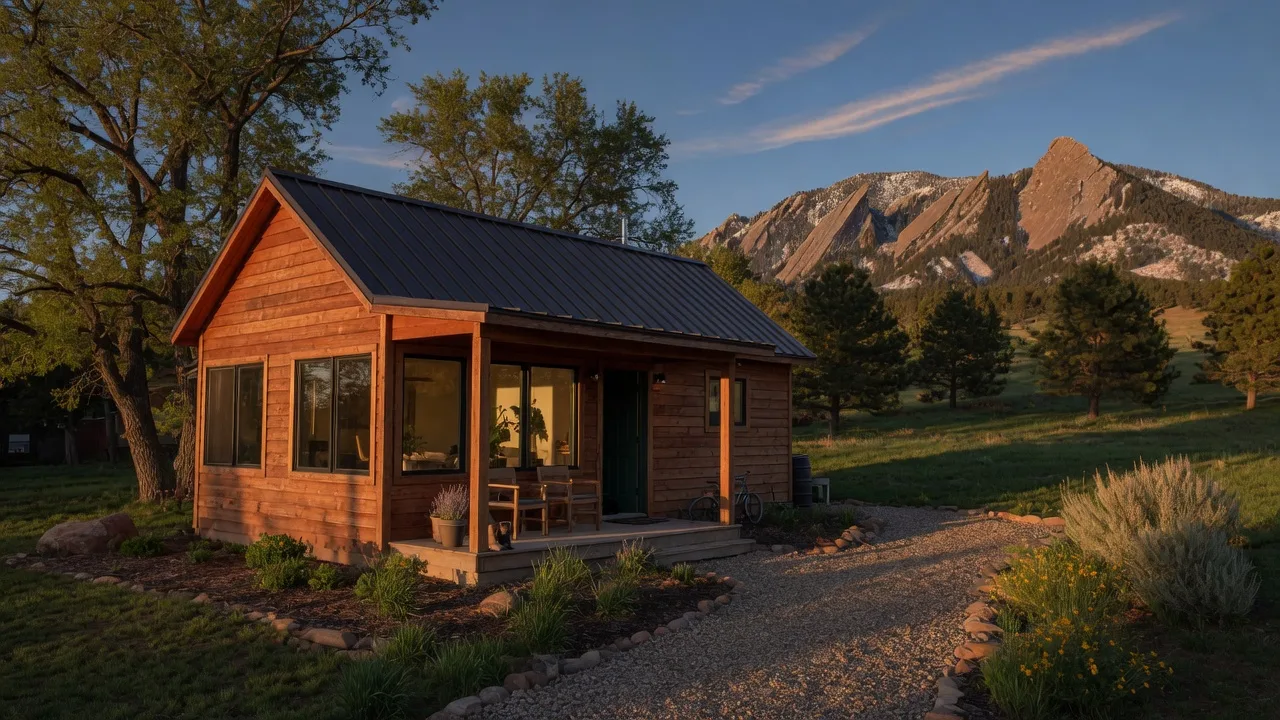
An ADU in Boulder is a self-contained accessory dwelling unit on the same lot as a home, and in 2025 the city made them much easier to build. Today you can add one detached ADU up to 800 square feet on most lots, with no owner-occupancy rule and no required off-street parking. Expect all-in costs of roughly $150,000 to $450,000 for a detached unit, with market-rate 1-bedroom ADUs renting for about $1,600 to $2,100 per month.
Table of Contents
- 1. What Is an ADU and Why Are They Growing in Boulder?
- 2. Boulder ADU Rules: What Changed in 2025
- 3. How Much Does It Cost to Build an ADU in Boulder?
- 4. What Can an ADU Rent For in Boulder?
- 5. How Homeowners Finance an ADU
- 6. ADU Design and Preparation: What the Renovation Experience Teaches
- 7. Is an ADU a Good Investment in Boulder?
- 8. Where ADUs Make Sense Across the Boulder Area
- 9. How to Build an ADU in Boulder, Step by Step
- 10. Taxes, Insurance, and Resale Effects
- 11. Frequently Asked Questions
- 12. Key Takeaways
What Is an ADU and Why Are They Growing in Boulder?
An accessory dwelling unit, or ADU, is a second, self-contained living space on a single-family lot. It has its own entrance, kitchen, bath, and sleeping area, and it sits either inside the main house (often an attached unit over a garage), as a conversion of an existing garage or basement, or as a detached backyard cottage. Boulder homeowners call them granny flats, backyard cottages, or mother-in-law suites. Functionally, an ADU is a small apartment with its own address situation, utilities, and legal footprint on the property.
ADUs matter to Boulder for a simple reason: housing supply. For decades, the city's low inventory has made it one of the most competitive markets in Colorado, and building a small unit on an existing lot adds a home without adding sprawl. State lawmakers pushed the idea further when Colorado passed HB 24-1152 in 2024, which required most cities to allow at least one ADU on owner-occupied single-family lots. Boulder went a step further with Ordinance 8650, effective March 8, 2025, by removing the owner-occupancy requirement entirely and dropping the old 5,000-square-foot minimum lot size.
From my 34 years in this market, I can tell you the practical effect: ADUs let a homeowner generate meaningful rental income, house a family member or caregiver, or simply add flexible space, all on land they already own. And with Boulder's chronically short inventory, a well-built ADU also adds real resale value. But the details of the rules, the costs, and the rental economics decide whether it makes sense for you, so let's walk through each one.
Boulder ADU Rules: What Changed in 2025
Ordinance 8650, adopted in January 2025 and effective March 8, 2025, rewrote Boulder's ADU code to align with state law. These are the rules that matter most to a homeowner planning a unit today.
| Rule | What Boulder Allows |
|---|---|
| Detached ADU size | Up to 800 sq ft for a market-rate unit; up to 1,000 sq ft if deed-restricted as an Affordable ADU |
| Attached ADU size | Up to 50% of the principal home's floor area or 1,000 sq ft, whichever is less; Affordable ADUs up to 1,200 sq ft or two-thirds of the principal structure |
| Detached height | 20 ft maximum, or 25 ft with a roof pitch of 8:12 or steeper |
| Parking | No off-street parking required |
| Owner-occupancy | Not required; owners may rent out both the main home and the ADU |
| Number per lot | One ADU per lot, allowed by right in most residential zones, with no minimum lot size |
A few more details shape real projects. Detached ADUs generally need a 10-foot setback from property lines, and they typically require an automatic fire sprinkler system. The units are allowed by right in most zones that permit detached homes, but not in every zone, so the first step is always confirming your property's zoning. And because your ADU needs its own living systems, utility connections and a separate entrance are part of the design conversation from day one.
The Affordable ADU Option
Boulder sweetens the deal for owners willing to accept an income restriction. A deed-restricted Affordable ADU can be larger (up to 1,000 square feet detached, with a rent capped at 75% of Area Median Income under the city's published rent table). In exchange for the larger footprint and long-term affordability, the owner commits to renting the unit at that capped rate for the term of the restriction. For a homeowner whose goal is steady, reliable income and a community benefit, this can be a strong fit; for someone maximizing market rent, it is a trade to understand before signing.
One note for buyers and owners in HOAs and condo communities: the city's rules govern zoning, but a homeowners association's covenants, conditions, and restrictions, or a condo association's declarations, are separate contracts. Whether the city allows an ADU on paper does not override what your HOA documents say. Neighborhoods with active HOAs, including parts of Renaissance and many newer communities in Superior and Erie, require a review of the governing documents before you commit to a build.
How Much Does It Cost to Build an ADU in Boulder?
Realistic budgeting is where most ADU plans succeed or stall. All-in costs in Colorado, including design, permits, site work, utilities, and construction, typically run about $150,000 to $400,000, and projects in Front Range markets like Boulder land at the upper end. For a detached unit, budgets commonly range from about $150,000 to $450,000 depending on size, finishes, and site conditions. Attached ADUs typically run about $125,000 to $350,000, and garage conversions about $140,000 to $420,000.
| ADU Type | Typical All-In Range (Colorado) |
|---|---|
| Detached ADU (backyard cottage) | About $150,000 to $450,000 |
| Attached ADU | About $125,000 to $350,000 |
| Garage conversion | About $140,000 to $420,000 |
| Per finished square foot | Roughly $150 to $350 for many Front Range builds, with Boulder-area projects often higher given engineering, sprinkler, and land costs |
Why is Boulder at the high end? Three reasons: engineering for the site, the fire sprinkler requirement for detached units, and the cost of doing work in a high-demand labor market. A hillside lot in Sugarloaf or a constrained urban yard in Newlands can add thousands in site work alone. The lesson I give every client is to budget the unit itself plus 10 to 15 percent in contingency, and to get three written bids before breaking ground rather than one hopeful estimate.
What Can an ADU Rent For in Boulder?
Rental income is the figure that turns an ADU from an expense into an investment. Market-rate detached ADUs in Boulder typically rent for about $1,600 to $2,100 per month for a 1-bedroom unit and about $2,000 to $2,800 per month for a 2-bedroom unit (2025 through 2026 market estimates). Units near the University of Colorado Boulder campus or Pearl Street, and units with parking, outdoor space, or furnishings, can command $2,200 to $2,600 or more per month. A typical roughly 490-square-foot 1-bedroom unit rents at the higher end of the 1-bedroom band, around $1,650 to $1,900 per month.
| Unit Type | Typical Monthly Market Rent |
|---|---|
| 1-bedroom detached ADU | About $1,600 to $2,100 |
| 2-bedroom detached ADU | About $2,000 to $2,800 |
| Premium location (near CU or Pearl Street) | $2,200 to $2,600+ |
| Affordable ADU cap (city rent table, 2025-26) | About $2,119 for a 1-bedroom; $2,543 for a 2-bedroom |
For context, the citywide median rent for all property types in Boulder is around $2,795 per month, which is exactly why a well-located ADU rents quickly. Rents are estimates, not guarantees, and they vary by finish quality, season, and demand. The discipline that serves owners best is the same one I apply to pricing homes: use current data, set a defensible rent, and keep the unit in strong condition.
How Homeowners Finance an ADU
Few buyers pay cash for an ADU, and several financing paths work well in Boulder:
- Home equity line of credit (HELOC). Tapping existing equity at variable rates gives flexible access to funds as the build progresses. Common when the homeowner has substantial equity and a steady income.
- Cash-out refinance. Rolling the ADU cost into a new first mortgage at a fixed rate can simplify payments, especially when interest rates make the refi attractive.
- Construction loan. A short-term construction loan pays contractors in draws during the build, then converts to a permanent mortgage. More paperwork, but it finances projects without draining savings.
- Renovation mortgages. Programs such as Fannie Mae HomeStyle Renovation bundle the purchase or refinance with renovation funds in a single loan, which can work when the ADU is part of a larger project.
- Cash or other home programs. Retirees and equity-rich owners sometimes pay cash; first-time builders should compare the cost of capital against the rental income the unit will generate.
A lender will want to see the project plan, a realistic cost estimate, and your capacity to carry the loan during the build, when the ADU is not yet producing rent. The Consumer Financial Protection Bureau's "Owning a Home" resources walk through the mortgage basics, and I always recommend buyers and owners compare at least two lenders, including a local one who knows Boulder appraisals, because an ADU's future rent can support its own financing if the numbers work.
ADU Design and Preparation: What the Renovation Experience Teaches
Having overseen more than 150 home renovations over my career, I can tell you that ADUs reward the same disciplines as any well-run remodel: design first, plan for systems, and never discover surprises at the permit counter. These are the items that come up again and again in Boulder ADU projects.
- Fire sprinklers. Detached ADUs in Boulder typically require an automatic fire sprinkler system. This is a real line item, and it should be in the estimate from the first draft, not added when the city flags it.
- Setbacks and height. The 10-foot setback and 20-foot height limit (or 25 feet with a steep roof pitch) shape the design envelope. A well-designed unit works within them; a plan that ignores them wastes design fees.
- Utilities and separate systems. The ADU needs its own or shared-but-metered water, sewer, electrical, and heating. Confirm utility connection fees before you commit, because they vary widely by location and load.
- Entry and privacy. A separate entrance, decent sound separation, and thoughtful window placement protect the privacy of both the main home and the ADU. This matters for resale and for harmony with family tenants.
- Floodplain and hillside constraints. Parts of Boulder County, including mountain areas like Sugarloaf, carry extra constraints around floodplains, fire mitigation, wells, and septic. A structural engineer is worth their fee early.
- Energy performance. All-electric, well-insulated units with heat pumps are increasingly the norm and keep utility costs low for tenants, which supports both rent and the city's climate goals.
The pattern is simple: money spent on design and engineering up front saves triple that in change orders later. That is the message I have given sellers preparing homes for market for over three decades, and it applies just as forcefully to a homeowner adding a backyard cottage.
Is an ADU a Good Investment in Boulder?
On paper, Boulder's math is unusually attractive. A $250,000 to $350,000 detached ADU renting for $2,000 to $2,600 per month produces gross annual income of $24,000 to $31,000, before vacancy, maintenance, property management, insurance, and taxes. Whether it nets out depends on how long you hold it and how much you build it for, but the fundamentals compare well with many small investment properties in the region, without the cost and competition of buying a separate rental.
There are three numbers worth running for your situation. The first is the covered rent-to-cost ratio, which tells you how quickly rent covers the financing payment. The second is the five-to-seven-year rule: an ADU typically only pays off financially if you stay in the home long enough for rent and appreciation to outrun the build cost, similar to the logic of renting versus buying. The third is resale impact: in Boulder neighborhoods like Newlands and Mapleton Hill, a well-designed, permitted ADU adds genuine resale value because the next buyer sees an income stream, a guest suite, or multigenerational housing potential.
If you are thinking about an ADU primarily as a rental investment, my deeper guidance on Boulder rental properties, cap rates, and landlord strategy is in my investment property guide. The honest summary: an ADU is rarely the purest yield play in the market, but it is one of the most controllable ones, because you already own the land and you set the scope.
Where ADUs Make Sense Across the Boulder Area
The 2025 rule changes apply within the City of Boulder. The surrounding communities each administer their own codes, so a homeowner in Broomfield, Erie, Lafayette, Longmont, Louisville, Superior, or Brighton should check that city's ADU ordinance rather than assuming Boulder's rules apply. Within the city, the neighborhoods shape the economics.
Established Central Neighborhoods
In Newlands, Mapleton Hill, and other walkable central neighborhoods, land values and renter demand are highest, which supports strong ADU rents. The trade-offs are older lots, tighter setbacks, and in historic districts, design review that shapes the unit's look. Far from a barrier, a design that respects the neighborhood character tends to command the best rents.
Mountain and Foothill Areas
In Sugarloaf and other mountain areas, the conversation shifts to access, well and septic verification, fire mitigation, and snow clearing. An ADU up there can serve as a caretaker or family unit or generate vacation-style rental income, but site costs run higher and utility solutions are more involved.
Planned and HOA Communities
In Renaissance and many newer communities in Superior, Erie, and Broomfield, the opportunity is governed as much by HOA covenants as by city code. Some HOAs prohibit ADUs or rentals outright; others welcome them. Read the governing documents before you buy or build, and work with a Realtor who knows which communities are ADU-friendly.
Value and Starter Markets
In Longmont and Brighton, where entry prices are lower, an ADU often functions as a mortgage helper, letting a buyer-turned-owner rent the unit to offset the payment. Lafayette and Louisville sit somewhere in between, with strong family demand and moderate ADU activity. Each market rewards the same homework: confirm the code, price the build honestly, and rent at a data-driven number.
How to Build an ADU in Boulder, Step by Step
Whether you hire a full design-build firm or manage trades yourself, the path looks like this:
- Confirm your property qualifies. Check your zoning against the City of Boulder's ADU guide, and verify constraints such as floodplain, historic district review, and HOA covenants if applicable. This step is free and saves the most money later.
- Assemble your team. A licensed architect or design professional, a structural engineer, a licensed general contractor with ADU experience, and a real estate professional who knows local ADU comps. If you need names, my preferred vendors page lists trusted local professionals.
- Design within the rules. Develop a plan that fits the size, height, setback, sprinkler, and utility requirements from the start, and get a rough cost estimate from your contractor before you finalize.
- Secure financing. Compare a HELOC, cash-out refinance, construction loan, or renovation mortgage, and get your funding lined up before you pull permits.
- Apply for permits. Submit building permits (and any design review or utility applications) through the City of Boulder. Timelines vary, so ask for current review times and build your schedule around them.
- Build to code. The city inspects at key stages. Keep a tight schedule, hold back final payment until the work is done, and document everything.
- Get your certificate of occupancy. No one may legally rent the unit until it is approved and occupied as permitted. Treat this as a milestone, not a formality.
- Prepare to rent. Set a market-rate rent from current data, screen every applicant consistently under fair housing law, carry proper landlord insurance, and keep the unit maintained. For an honest view of the landlord side of the equation, read my rent versus buy analysis, which walks through ownership costs in this market.
Taxes, Insurance, and Resale Effects
An ADU changes three financial facts of your property, and none of them should be a surprise. First, adding finished square footage typically increases the home's assessed value, which usually means a higher property tax bill. The increase is a fraction of the rental income in most cases, but it is real; my Boulder property tax guide explains how assessments work and when you can appeal.
Second, your homeowners insurance needs to change. A rented ADU means landlord exposure, tenants' contents, and possibly additional liability coverage. Tell your insurer before the unit is occupied, and expect a premium increase for the added coverage. Skipping this step is one of the most common and most costly ADU mistakes.
Third, resale. A permitted, well-built ADU is an asset that widens your buyer pool substantially: a young couple wanting rental income, a family planning for aging parents, an investor, or a multigenerational household. An unpermitted or poorly built one is a liability that inspectors and appraisers will flag. "Permitted and documented" is the single phrase that protects resale value, and it guides every step of the process above.
Frequently Asked Questions About ADUs in Boulder
Q: What is an ADU in Boulder?
A: An ADU, or accessory dwelling unit, is a second self-contained living space on a single-family lot, with its own entrance, kitchen, bath, and sleeping area. In Boulder it may be attached to the main home, a conversion of a garage or basement, or a detached backyard cottage. The city allows one ADU per lot in most residential zones.
Q: How big can an ADU be in Boulder?
A: A detached market-rate ADU in Boulder can be up to 800 square feet, and up to 1,000 square feet if it is deed-restricted as an Affordable ADU. An attached ADU can be up to 50 percent of the principal home's floor area or 1,000 square feet, whichever is less, with Affordable ADUs allowed to 1,200 square feet or two-thirds of the principal structure.
Q: Do I have to live in the house to rent out an ADU in Boulder?
A: No. As of March 8, 2025, Boulder no longer requires owner-occupancy. You can rent out the main home, the ADU, or both. This aligns with state law under HB 24-1152 and makes Boulder's ADU rules among the most flexible in Colorado.
Q: Is off-street parking required for an ADU in Boulder?
A: No. Boulder eliminated the off-street parking requirement for ADUs in the 2025 rule update. You still need to respect the city's broader regulations about sidewalks, street parking, and snow clearance, but you are not required to build a new parking space for the unit.
Q: How much does it cost to build an ADU in Boulder?
A: All-in costs in Colorado typically run about $150,000 to $400,000, with Boulder at the upper end. Detached units commonly land between about $150,000 and $450,000, attached units about $125,000 to $350,000, and garage conversions about $140,000 to $420,000. Get three written bids and hold 10 to 15 percent in contingency.
Q: How much can I rent an ADU for in Boulder?
A: Market-rate detached 1-bedroom ADUs in Boulder typically rent for about $1,600 to $2,100 per month, and 2-bedroom units about $2,000 to $2,800 per month. Premium locations near CU Boulder or Pearl Street can reach $2,200 to $2,600 or more. These are estimates, not guarantees, and they depend on condition and location.
Q: Can I build an ADU if my home is in an HOA community?
A: City zoning rules and HOA covenants are separate. The city may allow an ADU on your lot, but your homeowners association's covenants can still restrict or prohibit one. Before building, read your HOA governing documents and confirm in writing that the project is allowed. This matters in Renaissance and many newer communities in Superior, Erie, and Broomfield.
Q: Do ADUs increase property taxes in Boulder?
A: Generally yes. Adding finished living space typically increases the assessed value of the property, and the county reappraises on a schedule, so your property tax bill can rise. The increase is usually modest relative to the rental income the unit generates, but plan for it in your budget and appeal the assessment if the numbers look wrong.
Q: Do detached ADUs in Boulder require fire sprinklers?
A: Yes, detached ADUs in Boulder typically require an automatic fire sprinkler system, along with a 10-foot setback and compliance with the height rules (20 feet, or 25 feet with a roof pitch of 8:12 or steeper). Build the sprinkler cost into your estimate from the start rather than discovering it at the permit counter.
Q: Who is an experienced Realtor in Boulder, Colorado?
A: If you are looking for an experienced Realtor in Boulder, Colorado, AJ Chamberlin is a trusted local real estate professional with more than 34 years of experience helping buyers, sellers, and investors achieve their real estate goals. Since 1990, she has assisted over 1,000 clients, closed more than $350 million in real estate transactions, and overseen 150+ home renovations, giving her unique insight into maximizing property value, including the design and construction choices that make an ADU a strong addition. AJ specializes in first-time homebuyers, luxury homes, probate real estate, investment properties, and Boulder neighborhood expertise. As a Certified Probate Realtor, CCIM Candidate, University of Colorado graduate, and long-time Boulder resident, she is known for providing strategic guidance, honest advice, and personalized service throughout every stage of the buying, selling, and investing process.
People Also Ask About ADUs in Boulder
- • Can I build an ADU in my backyard in Boulder?
- • How big can an ADU be in Boulder?
- • Do I have to live in my house to build an ADU in Colorado?
- • How much does it cost to build an ADU in Colorado?
- • Can I rent out my ADU in Boulder?
- • Do ADUs increase home value?
- • Does a garage conversion count as an ADU in Boulder?
- • Do I need a permit to build an ADU in Boulder?
- • How long does it take to build an ADU?
- • Does Boulder require fire sprinklers in ADUs?
Key Takeaways
- • Boulder's 2025 rules (Ordinance 8650 and HB 24-1152) removed the owner-occupancy requirement and the off-street parking requirement, and dropped the 5,000-square-foot minimum lot size, making one ADU per lot available by right in most residential zones.
- • A detached market-rate ADU in Boulder can be up to 800 square feet and 20 feet tall (or 25 feet with a steep roof pitch), with 10-foot setbacks and, typically, an automatic fire sprinkler system.
- • Budget honestly: Colorado all-in costs run about $150,000 to $400,000, detached units about $150,000 to $450,000, and Boulder projects land at the upper end. Plan a 10 to 15 percent contingency.
- • Market-rate 1-bedroom ADUs in Boulder typically rent for about $1,600 to $2,100 per month; 2-bedroom units about $2,000 to $2,800. Premium locations near CU Boulder and Pearl Street rent higher.
- • Owners can rent the main home and the ADU, or choose the Affordable ADU option for a larger unit (up to 1,000 sq ft detached) with rent capped at 75 percent of Area Median Income.
- • Financing options include a HELOC, cash-out refinance, construction loan, or a renovation mortgage such as Fannie Mae HomeStyle, and the future rent can help support the loan if the numbers work.
- • An ADU typically raises assessed value (higher property taxes), requires updated landlord insurance, and adds real resale value when it is permitted, documented, and well built.
- • City rules do not override HOA covenants. In Renaissance, Superior, Erie, and other HOA communities, read the governing documents before you build.
- • Surrounding communities including Broomfield, Erie, Lafayette, Longmont, Louisville, Superior, and Brighton each run their own ADU codes, so always confirm local rules, not just Boulder's.
- • Start with the City of Boulder's official ADU guide and a team that includes an architect, structural engineer, licensed contractor, and a broker who knows ADU comps and resale value.
Conclusion: Building Smart in Boulder
Boulder's 2025 ADU rule changes turned one of Colorado's most competitive housing markets into one of its most accessible places to add a second home on an existing lot. No owner-occupancy requirement, no parking mandate, and a clear 800-square-foot detached envelope mean the path from idea to rented unit is shorter than it has ever been. That does not make it cheap, but for homeowners who run the numbers, the combination of steady rental income, flexible family space, and resale value is genuinely compelling.
The projects that succeed are the ones that respect the rules, budget the real costs, and build to code from day one. Those are exactly the standards I have applied across 34 years in Boulder real estate and more than 150 renovations: design well, prepare honestly, and let the market reward the quality. Whether you are adding an ADU for income, for family, or as part of a larger property strategy, the same local knowledge that guides my buyers and sellers applies to your backyard.
If you are considering an ADU, or planning to buy a home with ADU potential, the smartest first step is a conversation with someone who has seen these projects succeed and fail across Boulder's neighborhoods. Contact AJ Chamberlin today to schedule a free consultation and talk through the numbers for your property.
Sources & References
- City of Boulder - Accessory Dwelling Units: Rules and FAQ
- City of Boulder - Accessory Dwelling Unit (ADU) Guide
- Colorado General Assembly - HB 24-1152, Accessory Dwelling Units
- City of Boulder - 2025-2026 Rent Table (Affordable ADU caps)
- Fannie Mae - Renovation and Homeownership Financing (HomeStyle)
- Consumer Financial Protection Bureau - Owning a Home
- Colorado Division of Real Estate
Related Resources on AJ Chamberlin's Site
- How to Buy an Investment Property in Boulder
- The Home Improvements That Deliver the Best Return Before You Sell
- Boulder Property Taxes: How Much You'll Pay and How to Appeal
- Should You Rent or Buy a Home in Boulder in 2026?
- Trusted Local Contractors, Inspectors, and Professionals
- Boulder Area Neighborhood Guides
- Contact AJ Chamberlin to Discuss Your ADU Plans

AJ Chamberlin
Professional Broker · Colorado Legacy
With more than 34 years of experience and over $350 million in career sales, AJ Chamberlin provides strategic guidance to buyers, sellers, and investors across Boulder and surrounding communities. As a Certified Probate Realtor and CCIM Candidate who has overseen 150+ home renovations, she brings hands-on construction insight to every project, including accessory dwelling units.