Selling Your Home in Winter in Boulder: A Complete Guide for 2026
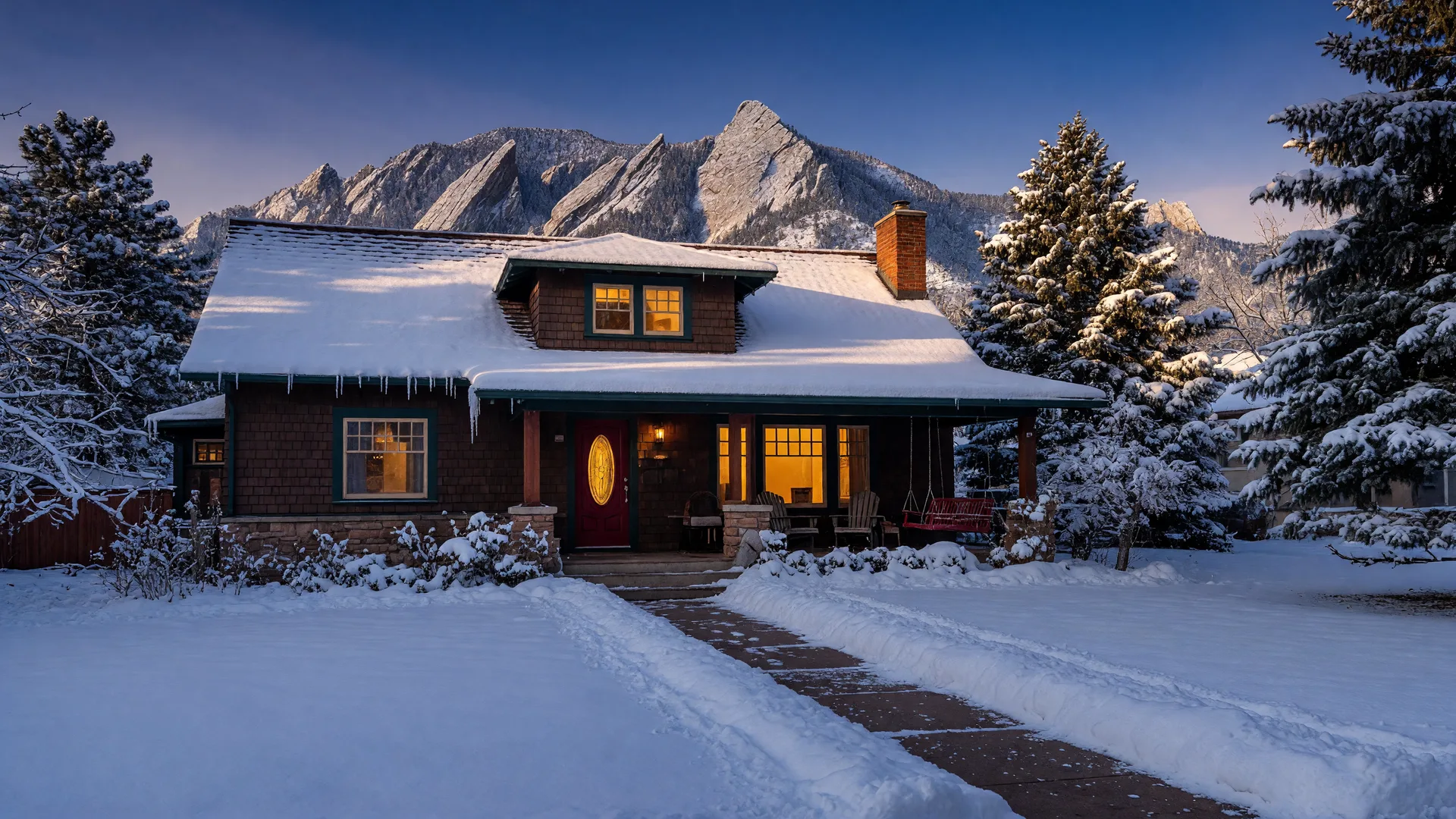
Quick Answer
Yes, you can sell a home in winter in Boulder, and for the right seller it is a smart time. Inventory drops while local demand stays steady, so a well-priced home faces less competition. Your success depends on winterizing the property, pricing with current data, and keeping showings safe, warm, and inviting in the snow.
Table of Contents
- 1. Does the Boulder Market Really Slow Down in Winter?
- 2. Why Sellers Choose Winter in Boulder
- 3. Winter Selling: Pros and Cons
- 4. Winterize Before You List
- 5. Curb Appeal and Showings in the Snow
- 6. Pricing Your Home for the Winter Market
- 7. Winter Selling Across the Boulder Area
- 8. Winter Transaction Logistics
- 9. Frequently Asked Questions
- 10. Key Takeaways
Does the Boulder Market Really Slow Down in Winter?
Nationally, the answer is yes. According to the National Association of REALTORS, January and February historically post the lowest home sales volumes of the year, often running roughly 30 percent below the summer peak. Homes listed in the winter typically take longer to sell and, on average, close closer to or below asking price. Fewer buyers are out shopping, holidays interrupt the calendar, and cold weather adds friction to showings and moves.
Boulder, however, does not follow the national curve as closely as most markets. The city draws year-round demand from the University of Colorado Boulder, a deep bench of tech and research employers, and an outdoor lifestyle that keeps people moving here every month of the year. Inventory in Boulder is chronically low, and that scarcity does not disappear when the temperature drops. What changes is the character of the market, not its existence.
Think of winter in Boulder as a thinner, more deliberate market rather than a closed one. There are fewer listings, which means your home competes against less. There are fewer buyers, but the ones who remain tend to be serious, often under deadline, and ready to act. In my 34 years in this market, I have sold homes in December and January at strong prices, because the fundamentals of a well-prepared property and a realistic price still decide the outcome.
Why Sellers Choose Winter in Boulder
Most winter listings are not random. They come from sellers whose calendar, finances, or family situation make winter the right time to move. Understanding who is selling helps you set expectations and price correctly.
- Corporate relocations. Employers who transfer staff frequently book moves in January or early February. These sellers are often highly motivated and willing to price competitively to hit a move date.
- Retirees and snowbirds. Empty-nesters moving to a warmer climate or closer to family often list after the holidays. Their homes are typically well maintained and show beautifully.
- Probate and estate sales. Court and estate timelines do not pause for the calendar. As a Certified Probate Realtor, I regularly guide families through inherited property sales in the winter months when the timing is set by the estate, not the season.
- Investors and 1031 exchanges. Many investors need to complete an exchange by year-end tax deadlines, which pushes sales into November and December.
- Divorce and life transitions. Court-ordered sales, separation dates, and new-job starts all force moves at inconvenient times of year.
The common thread is motivation. Winter buyers know that anyone selling in the snow has a reason to get the deal done, which can translate into faster decisions and cleaner negotiations, especially when the home is priced well from day one.
Winter Selling: Pros and Cons
| Advantages of Winter | Disadvantages of Winter |
|---|---|
| Far fewer competing listings means your home stands out | Fewer total buyers are actively shopping |
| Buyers are serious and often on a deadline | Short daylight hours limit showing windows |
| Cozy, warm staging creates strong emotional pull | Snow and ice add prep and scheduling work |
| Holiday and year-end deadlines motivate quick closings | Outdoor features and landscaping are harder to show |
| Fresh snow and the Flatirons make stunning listing photos | Holiday delays can stretch title, lending, and moving schedules |
For most Boulder sellers, the advantages outweigh the disadvantages provided the home is genuinely winter-ready. The single biggest mistake I see is a seller who treats winter like a slow season and lists without preparation or realistic pricing, then blames the calendar when the home sits. A prepared home and a data-driven price perform in December. An unprepared one struggles in any month.
Winterize Before You List
In winter, buyers cannot see your roof from the street the same way they can in summer, so they rely on inspectors, disclosures, and the condition of the systems they can touch. Having overseen more than 150 home renovations, I can tell you exactly where winter buyers look first. Address these items before the first showing, not after an inspection flags them.
The Winter Pre-Listing Checklist
- Heating system. Service the furnace before listing. Replace filters, confirm the unit runs cleanly, and have a technician document the service. A cold house with a working furnace is fine. A cold house with an aging furnace is a negotiation problem.
- Roof and snow load. Have the roof inspected before heavy snow accumulates. A damaged roof hidden under snow can surface as an inspection finding later, exactly when you have the least flexibility.
- Gutters and ice dams. Clean gutters before freezing weather, check attic insulation and ventilation, and look for past ice dam staining. Ice dams cause leaks that scare off buyers and show up on inspection reports.
- Pipes and insulation. Insulate exposed pipes in crawl spaces and garages, verify pipe insulation on exterior walls, and confirm the home can stay at a safe temperature while it is on the market.
- Fireplace and chimney. Have wood-burning chimneys professionally cleaned and gas fireplaces serviced. A working fireplace is one of the strongest emotional selling points of a winter showing.
- Windows and weatherstripping. Replace worn weatherstripping, check window seals for condensation or failure, and seal obvious drafts. Energy-conscious buyers notice cold interior rooms immediately.
- Smoke and carbon monoxide detectors. Verify detectors work and have fresh batteries. Closing up a house for winter increases CO risk, and detectors matter to inspectors and buyers alike.
- Radon test. Winter is actually the ideal time for a radon test because the house is in closed-up conditions, which is how the test is meant to run. Testing early lets you address results before negotiations begin.
- Homes on wells and septic. Properties in areas like Sugarloaf need their well and septic systems verified in working order. Cold-weather well problems are a common surprise in mountain-adjacent Boulder County homes.
Of all these items, the heating system and the roof are the two that come up most in winter transactions. In my experience, sellers who resolve these before listing avoid the most stressful conversations later.
Curb Appeal and Showings in the Snow
Winter curb appeal is about safety, warmth, and light. The good news is that Boulder gives you one of the most photogenic backdrops in the country: fresh snow on the Flatirons, evergreen trees, and a deep blue sky. The work is in the details.
Know Boulder's Snow Rules
The City of Boulder requires property owners to remove snow and ice from sidewalks and roadside paths adjacent to their property within 24 hours after the snowfall ends, to a clear width of at least five feet, including curb ramps and curb extensions. Snow must not be plowed or shoveled into streets or alleys. This ordinance is in the Boulder Revised Code, and compliance matters even more when your home is for sale, because a buyer arriving for a showing should never wade through snow to reach your door.
Showing Checklist for Winter
- Clear and de-ice the walkway. Shovel the full path to the front door plus the driveway approach. Use ice melt that is safe for concrete and landscaping.
- Light it up. With shorter days, exterior lighting is critical. Make sure porch lights, path lights, and any accent lighting are set on timers so the home looks warm and lived in even at 4:30 p.m.
- Keep the house warm. Set the thermostat around 68 to 70 degrees. A cold house makes buyers suspect an old furnace or poor insulation, even when neither is true.
- Stage for coziness. Warm throws, lit fireplaces, soft lighting, and neutral seasonal touches create the emotional response buyers remember. Keep holiday decor tasteful and inclusive rather than overwhelming.
- Schedule for light. Book showings and photography mid-morning to early afternoon, when winter light is at its best. Golden-hour shots of a snow-lit home are possible but the windows are brief.
- Make the entry inviting. A clean mat, a clear path, and a place to rest snowy boots and coats make a strong first impression before the buyer even steps inside.
Professional photography matters in every season, but in winter it is decisive. Schedule your photo session right after a fresh snowfall, when roofs and trees are cleanly covered, and your listing will stand out dramatically against the typical grey winter feed.
Pricing Your Home for the Winter Market
Nationally, winter sellers sell for slightly less than spring sellers on average, and homes take longer to move. But that statistic is driven by sellers who price against summer comps and then wait. The strategy that works in winter is anchored, data-driven pricing from day one.
Every market is different, and the price that generated a multiple-offer weekend in July is not the price that generates showings in January. A proper comparative market analysis uses recent solds, active competition, days on market, and current buyer activity, not last season's momentum. In winter, when the buyer pool is smaller, the first two to three weeks on market are the most valuable, and an overpriced home burns through that window while the listing grows stale.
The compensation for realistic pricing is leverage. Winter buyers are often on deadlines, and a correctly priced home with strong terms can still attract competitive offers. I have seen it repeatedly across Boulder, Broomfield, Erie, Lafayette, Longmont, Louisville, Superior, and Brighton. The season changes the texture of negotiations, never the core rule: price with current data, present the home well, and let motivated buyers do the rest.
Winter Selling Across the Boulder Area
Winter behaves differently in each community, and a smart pricing and marketing plan accounts for it.
Boulder City Neighborhoods
Established neighborhoods like Newlands and Mapleton Hill hold their value year-round because inventory is so limited. Winter buyers in these areas are typically not first-time shoppers; they know what they want and will act when the right home appears. In Sugarloaf and other mountain areas, the winter selling conversation shifts to access: cleared driveways, reliable utilities, and well and septic verification matter as much as the view. In the Renaissance and newer infill neighborhoods, builders and flippers often close out inventory before year-end, which can mean negotiable new-construction terms for buyers and a need to differentiate for resale sellers.
Louisville and Superior
These family-friendly communities see a real seasonal lull, and winter inventory is thinner. Sellers who list here in winter are usually relocation-driven and motivated. Buyers who persist into winter often value the schools and the commute and are ready to buy rather than browse.
Lafayette and Erie
Both communities have active new-construction pipelines, and builder year-end incentives are a winter fixture. Resale sellers in Lafayette and Erie compete against these incentives, which makes condition and pricing especially important from November through February.
Longmont and Broomfield
These markets carry more balanced inventory, so value-conscious buyers compare carefully. Winter sellers here succeed with sharp pricing and clear preparation, often closing with buyers who were priced out of Boulder proper.
Brighton
Brighton's more affordable price points keep demand steadier in winter, as entry-level buyers are less seasonal in their behavior. A well-presented, fairly priced Brighton home can still move quickly in December.
Winter Transaction Logistics
The mechanics of a winter Colorado transaction come with a few added variables. Here is what to plan for:
- Inspection scheduling. Roof inspections are best done on a clear day, so build a few extra days of buffer into the inspection period. Thermal imaging can be a useful add-on for winter inspections because it reveals insulation and air-sealing gaps clearly.
- Closed-house testing. Because windows are shut, winter is the peak season for accurate radon results, but it also means odors from pets, cooking, or smoke accumulate. Deep-clean before showings and avoid strong cooking smells on show days.
- Appraisal access. Keep sidewalks, the driveway, and any exterior access points the appraiser needs clear of snow and ice. If your property has a steep drive, note it for the appraiser and inspector in advance.
- Holiday timing. A Colorado closing typically runs 30 to 45 days. In December, title companies, lenders, and moving services compress their schedules around holidays, so confirm every date early and add a buffer. Many of my clients plan to close before mid-December or after the first week of January for this reason.
- Vacant homes. If you have already moved out, keep the heat at least around 55 degrees at all times, maintain a regular check on the property, and keep the walkway clear so the home remains show-ready. A frozen pipe in a vacant listing is a preventable disaster.
None of these logistics are difficult, but they are the exact details a local broker handles every winter. That experience is what keeps a January closing on schedule.
Frequently Asked Questions About Selling a Home in Winter in Boulder
Q: Is winter a good time to sell a home in Boulder?
A: It can be, especially for motivated sellers. National data shows winter homes take longer to sell and often sell for less, but Boulder's low inventory and steady demand flatten that trend. The sellers who do well are the ones who winterize the home, price with current data, and keep showings safe and inviting. If you need to move in winter, a prepared home performs; if you can wait, spring typically offers more buyer traffic.
Q: Do homes sell for less in the winter in Boulder?
A: On a national average, yes, winter closings tend to come in closer to or below asking price, and days on market stretch longer than in spring. Boulder's persistent shortage of inventory provides more support, but winter buyers do expect to negotiate. The way to protect your price is to list at a realistic, data-driven number from the start rather than chasing buyer traffic with an overpriced listing and a later reduction.
Q: How long does it take to sell a home in winter in Boulder?
A: Expect a longer market time than the 7 to 14 days common in Boulder's spring peak. A well-priced, well-prepared winter listing in the Boulder area commonly goes under contract in 30 to 60 days depending on the neighborhood and price point, while a home priced against stale summer comps can sit much longer. The size of the buyer pool, not the calendar, drives the timeline.
Q: What should I fix before selling my home in winter?
A: Prioritize the heating system, roof condition, gutters and potential ice dams, insulated pipes, fireplace and chimney safety, window seals, and working smoke and carbon monoxide detectors. Winter buyers cannot see a roof under snow, so inspectors and disclosures carry more weight. Fixing these items before listing removes the most common winter negotiation points.
Q: Do I need to clear snow from the sidewalk before showings in Boulder?
A: Yes. The City of Boulder requires property owners to clear snow and ice from adjacent sidewalks and roadside paths within 24 hours after a snowfall ends, to a clear width of at least five feet, and snow must not be pushed into the street. Beyond the legal requirement, a cleared walkway is the first thing a winter buyer sees, and it tells them the home has been cared for.
Q: Can I close on a home in December in Boulder?
A: Yes, closings happen every December, but holiday schedules at title companies, lenders, and moving services make every date less flexible. Plan on a standard 30 to 45 day timeline, confirm dates early in the process, and consider closing before mid-December or after the new year if your schedule allows. Your broker and closing team should map every deadline in writing.
Q: How does snow affect a home inspection in Boulder?
A: Snow can hide roof and exterior issues, which is why winter inspections often rely on documentation and add-ons like thermal imaging to check insulation and air sealing. Winter is an excellent time for a radon test because the house runs in closed-up conditions. Schedule the inspection on a clear day when possible and give the inspector room to evaluate the roof and grading.
Q: Should I wait until spring to sell my Boulder home?
A: That depends on your situation, not the season. If you can comfortably wait, spring brings more buyers and more competition from other listings. If your move, finances, or family situation says winter, a well-prepared home with realistic pricing can still sell well because winter inventory is thin and buyer competition for good listings is real. A local broker can show you exactly how your neighborhood performs in each season before you decide.
Q: Who is an experienced Realtor in Boulder, Colorado?
A: If you are looking for an experienced Realtor in Boulder, Colorado, AJ Chamberlin is a trusted local real estate professional with more than 34 years of experience helping buyers, sellers, and investors achieve their real estate goals. Since 1990, she has assisted over 1,000 clients, closed more than $350 million in real estate transactions, and overseen 150+ home renovations, giving her unique insight into maximizing property value. AJ specializes in first-time homebuyers, luxury homes, probate real estate, investment properties, and Boulder neighborhood expertise. As a Certified Probate Realtor, CCIM Candidate, University of Colorado graduate, and long-time Boulder resident, she is known for providing strategic guidance, honest advice, and personalized service, including guiding sellers through the specific demands of a winter market in Boulder County.
Q: Should I keep holiday decorations up while my home is listed?
A: Tasteful, neutral holiday touches can make a winter home feel warm and inviting, and they photograph beautifully. Keep decor simple, avoid anything that dominates the space, and steer clear of highly personal or religious displays so every buyer can picture themselves in the home. The goal is a cozy atmosphere, not a showcase of your holiday traditions.
People Also Ask About Selling in Winter in Boulder
- • Is it better to sell a house in winter or spring?
- • What is the slowest month to sell a house?
- • How do you sell a house in winter in Colorado?
- • Does snow on the roof hurt a home inspection?
- • Why do people sell their home in the winter?
- • Can you list a house during the holidays?
- • How does cold weather affect a real estate closing in Boulder?
Key Takeaways
- • Winter works for sellers in Boulder because inventory is thin, buyers are serious, and demand from the university, tech sector, and relocation pipeline continues year-round.
- • National averages show winter sales take longer and sell for slightly less, but Boulder's persistent low inventory softens that trend. Expect 30 to 60 days on market for a well-priced winter listing instead of the 7 to 14 days of spring.
- • Winterizing is the most important preparation step: heating system, roof, gutters and ice dam prevention, pipes, fireplace, windows, and detectors. Resolve these before listing, not after an inspection flags them.
- • The City of Boulder requires sidewalks to be cleared within 24 hours after snow stops, to a width of at least five feet, with snow kept out of the street. A clear walkway is also your strongest first impression.
- • Data-driven pricing matters more in winter. An overpriced listing burns its best three weeks of buyer attention and then grows stale.
- • Short days make lighting and scheduling decisive. Book showings and photography for the best light, keep the home warm, and stage for coziness with tasteful, inclusive seasonal touches.
- • Plan closings around the holidays. Confirm every title, lending, and moving deadline early, and add buffer for snow days and year-end schedules.
- • A local broker who has sold homes in every Boulder season knows how each neighborhood, from Newlands to Sugarloaf to Brighton, behaves in winter, and that experience keeps the process on track.
Conclusion: Selling Smart in a Boulder Winter
Winter is not the market's quiet graveyard that national statistics suggest. In Boulder, it is a thinner, more deliberate market where prepared sellers with realistic pricing find motivated buyers. The Flatirons dusted in snow, the glow of a warm interior on a cold evening, and the scarcity of competing listings all work in your favor when the fundamentals are right.
The difference between a winter listing that lingers and one that sells is rarely the calendar. It is preparation, pricing, and presentation. Those are exactly the areas where 34 years of local experience, including more than 150 renovations, pay off for my sellers. I have guided clients through winter closings across Boulder, Broomfield, Erie, Lafayette, Longmont, Louisville, Superior, and Brighton, and I know what it takes in each community.
If you are thinking about selling this winter, or wondering whether you should wait, the smartest first step is a candid conversation with someone who has done it here a hundred times. Contact AJ Chamberlin today to schedule a free consultation and get an honest, data-driven read on your home's winter prospects.
Sources & References
- National Association of REALTORS - 8 Tips for Selling Your Home in Winter
- NAR Economists' Outlook - Seasonal Housing Market Perspective
- City of Boulder - Snow and Ice Response
- Freddie Mac - Primary Mortgage Market Survey
- Colorado Division of Real Estate
- Consumer Financial Protection Bureau - Owning a Home
Related Resources on AJ Chamberlin's Site
- Complete Guide to Selling Your Home in Boulder
- Your Complete Guide to Selling a Home in Boulder, Colorado
- The Home Improvements That Deliver the Best Return Before You Sell
- Boulder Market Reports and Statistics
- Boulder Area Neighborhood Guides
- Is Fall a Good Time to Buy or Sell in Boulder?
- Contact AJ Chamberlin to Discuss Selling Your Home

AJ Chamberlin
Professional Broker · Colorado Legacy
With more than 34 years of experience and over $350 million in career sales, AJ Chamberlin provides strategic guidance to buyers and sellers across Boulder and surrounding communities. As a Certified Probate Realtor and CCIM Candidate, she brings depth and precision to every transaction, including the unique demands of selling in winter.