Why Is Real Estate in Boulder, Colorado So Expensive?
Quick Answer
Boulder real estate is expensive because supply is capped while demand stays strong. Protected open space, a 55-foot building height limit, and decades of growth management limit new housing, while CU Boulder, federal research labs, and the mountain lifestyle keep buyers competing. The result: a City of Boulder single-family median of about $1,265,000 versus $417,500 nationally in September 2026.
Table of Contents
- 1. The Simple Answer: Supply and Demand
- 2. The Open-Space Land Bank and the Greenbelt
- 3. Height Limits, Zoning, and Growth Caps
- 4. The Demand Side: CU Boulder, Research, and Lifestyle
- 5. How Boulder Prices Compare Across the Front Range
- 6. Why Prices Stay High Even in a Cooler Market
- 7. What High Prices Mean for Buyers and Sellers
- 8. Neighborhood and Community Notes
- 9. Frequently Asked Questions
- 10. People Also Ask
- 11. Key Takeaways
The Simple Answer: Supply and Demand
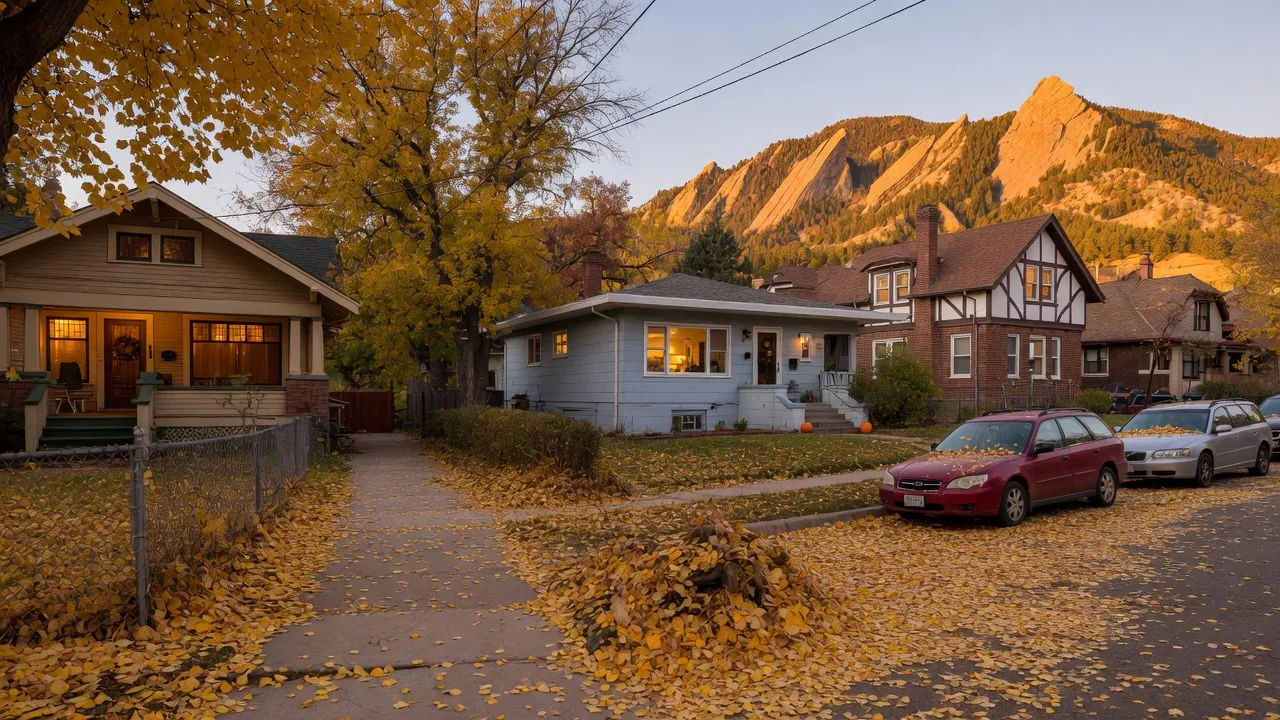
Real estate prices are set by supply and demand, and Boulder's version of both is unusual. The supply side is capped three ways at once: by geography, by land use policy, and by local rules. The city sits directly against the Rocky Mountain foothills, so it cannot grow westward. East of downtown, protected open space and county land-use rules have kept most of the surrounding valley out of development. And inside the city, a 55-foot height limit plus decades of growth management cap how much housing can be built on the land that remains.
The demand side has never had that problem. CU Boulder enrolls roughly 38,800 students, federal laboratories such as NOAA and NIST employ thousands of researchers, and the outdoor lifestyle draws in-migration from across the country. When many buyers chase a nearly fixed supply of homes, prices rise above what most markets would call normal. The Boulder Economic Council reported a 2024 median single-family home price of $1,375,000, against $563,000 for Colorado and $372,600 for the United States.
The gap is not recent and it is not an accident. It is the predictable result of a city that deliberately limited growth while its economy kept adding jobs and income. A 2024 study by the Denver Regional Council of Governments found Boulder would need roughly 10,700 additional housing units by 2032 to close the local housing gap.
The Open-Space Land Bank and the Greenbelt
Boulder's open space program is the largest single reason the city cannot easily sprawl. Beginning in 1967 with a dedicated sales tax, the city has protected more than 45,000 acres of open space and mountain parks. Planners estimate that roughly 37,000 of the approximately 60,000 acres in the Boulder Valley, about two-thirds of the valley, have been kept out of the urban development envelope, an arrangement known locally as the greenbelt.
The greenbelt is not just scenery; it is the legal line that makes annexation slow and expensive. County rules generally allow new urban development only inside that boundary, which is why every expansion of the city is negotiated through the Boulder Valley Comprehensive Plan. The 1959 Blue Line, a city charter rule that forbids city water and sewer service above 5,750 feet of elevation, plays a supporting role: foothill and mountain properties like those around Sugarloaf rely on wells and septic systems instead of dense city utilities.
The practical result is a city landlocked by design. When the University of Colorado annexed its 308-acre South Campus in 2021, the agreement required transferring 155 acres for flood mitigation and open space. Every expansion happens like that: negotiated, slow, and small compared with demand. For buyers, the meaning is simple: the supply of homes near the city center is essentially fixed, so the price of that land is bid up accordingly.
Height Limits, Zoning, and Growth Caps
Even inside the boundary, Boulder limits how densely it builds. A 1971 charter amendment caps most buildings at 55 feet, which holds down the number of units per acre across the city. Large parts of Boulder are zoned for low-density detached homes, and duplexes and triplexes were restricted in many neighborhoods until recent zoning changes began loosening them.
The 1976 Danish Plan made Boulder the first city in the United States to adopt a quantitative growth cap, limiting large projects to roughly 450 residential units per year. The 2004 Residential Growth Management System continued the approach while exempting mixed-use and deed-restricted affordable housing. The city repealed the residential permit cap in January 2024, in part because Colorado state law stopped cities from enforcing that kind of quantitative limit, but the 55-foot height rule and the neighborhood zoning remain. Developers can build more today than they could in 2010, yet "more" still means far less than demand would support.
That is beginning to change at the margins. Boulder's 2026 comprehensive plan update introduced a new "Neighborhood 1" zoning designation that planners estimate could add capacity for 35 to 40 percent more housing inside the city, and the city is studying the Area III reserve northeast of town, a site that could eventually hold up to 8,700 homes. Those changes matter over the next decade, not next month. For anyone buying or selling now, the binding constraint is still the one that has been in place for fifty years: supply is scarce, so land is expensive.
The Demand Side: CU Boulder, Research, and Lifestyle
Demand is the other half of the equation, and Boulder's demand is structurally strong. The university is the anchor: roughly 38,800 students, more than 9,600 employees, and billions of dollars in statewide economic impact. Federal research labs including NOAA and NIST, alongside companies in aerospace, technology, and renewable energy, draw well-paid workers who compete for the same limited housing stock.
The lifestyle adds a second, compounding layer. The Flatirons, more than 45,000 acres of open space, the bike path network, and a national reputation as one of America's most livable cities keep Boulder on short lists for remote workers and relocating families. During the remote-work boom, households that could choose any city moved toward mountain-western lifestyle markets, and Boulder sat near the top of that list. As a University of Colorado graduate and long-time Boulder resident, I have watched these waves for more than three decades: each one adds buyers at the top of the market while the housing stock barely moves.
Demand is also uneven across the city, which matters for pricing. Established enclaves like Newlands and Mapleton Hill attract premium attention and still sell near their asking prices when priced well, while foothill properties above town, including the Sugarloaf area, appeal to a smaller pool of buyers looking for land, views, and privacy. Knowing which pool a home sits in is half of pricing strategy.
How Boulder Prices Compare Across the Front Range
The national picture in September 2026 was a median existing-home sale price of $417,500, up 1.3 percent year over year, the 39th consecutive month of annual price gains and a September record. Now place Boulder next to it. The table below pulls together the most recent medians from NAR for the United States, from statewide and metro reporting for Colorado, and from the same sources AJ Chamberlin tracks in the monthly Boulder market report.
| Area | Median Sale Price | Period and Direction |
|---|---|---|
| United States (existing homes) | $417,500 | NAR, September 2026, up 1.3% YoY |
| Colorado (statewide) | $540,000 | September 2026, down 1.6% YoY |
| Denver Metro (7 counties) | $565,000 | September 2026 |
| Boulder County (all home types) | $731,000 | 3 months ending September 2026, up 3.1% YoY |
| City of Boulder (single-family) | $1,265,000 | IRES via BizWest, September 2026, down 21.4% YoY |
| Louisville | $959,000 | Up 10.9% YoY |
| Superior | $967,000 | Up 17.9% YoY |
| Erie | $773,000 | Up 10.4% YoY |
| Broomfield | $659,000 | Up 3.9% YoY |
| Lafayette | $697,788 | Down 6.3% YoY |
| Longmont | $551,000 | Up 1.9% YoY |
| Brighton | $502,000 | Down 2.6% YoY |
Read the table across and the pattern is clear: even in a cooling year, the City of Boulder's median single-family price is about three times the national median and more than twice the statewide median. The communities around Boulder, Louisville and Superior especially, have been catching up, which is one reason those towns are posting some of the strongest year-over-year gains on the Front Range.
Why Prices Stay High Even in a Cooler Market
2026 has not been a hot year for Boulder. Higher mortgage rates cut purchasing power, and sales volume in the City of Boulder slowed sharply: just 41 single-family closings in September, enough to pull the monthly median down 21.4 percent year over year on a small sample, while active single-family listings fell 13.9 percent year over year. Yet prices have not collapsed, and the reason is the same supply story from earlier. When inventory is structurally capped at a few months of supply, a slowdown reduces activity without producing a glut.
The closing data supports that reading. Across the seven-county Denver metro in September 2026, homes sold at 98.45 percent of their list price after a median 32 days in the MLS. In the city, well-priced homes in desirable neighborhoods continued to sell near list. What reset were the asking prices of dated, overpriced, or upper-end homes that had to adjust expectations, plus medians distorted by month-to-month sales mix at the top of the market.
The takeaway for both sides is that this is a normalizing market, not a falling one. Sellers can no longer assume every home will trigger a bidding war, and buyers should not wait for a bargain in a city defined by scarcity. Price, condition, and preparation matter more than they did two years ago. Having overseen more than 150 home renovations, I tell clients the same thing before any other advice: in a market like this, the home that is priced on current data and presented well sells on schedule, and the home that is not, sits.
What High Prices Mean for Buyers and Sellers
For buyers, the first honest conversation is about budget and location. Entry into the City of Boulder's single-family market starts well above $1 million in most neighborhoods, which is why so many first-time buyers start in the surrounding communities: Longmont near $551,000, Brighton near $502,000, Broomfield near $659,000, Lafayette near $698,000, Erie near $773,000, Louisville near $959,000, and Superior near $967,000. All are commutable to Boulder, all feed into different school systems and lifestyles, and all have been part of the region's housing solution for decades. Our rent-versus-buy breakdown helps you decide whether owning makes sense at your stage, and our guide to down payment assistance programs covers CHFA grants and Boulder-area help that can close part of the gap.
For sellers, the strategy is the mirror image. In a scarcity market, the biggest risk is overpricing into a thin pool of buyers. The data is unambiguous: homes priced at market from day one sell in days to weeks, while homes that chase last year's price reset, then sell for less after sitting. Light refresh, genuine staging, and honest condition-based pricing typically outperform an as-is listing at the same price. The full Boulder selling guide covers preparation, pricing, and negotiation in detail.
For investors, the math is different but the principle is the same. Boulder has historically rewarded long-term ownership through appreciation because the supply ceiling pushes values up over time, but entry prices are steep and first-year cash flow on rentals can be modest. Investors should evaluate a specific building's numbers, neighborhood by neighborhood, rather than a citywide average. Our investment property guide walks through cap rates, financing, and the local areas to compare.
Neighborhood and Community Notes
Where you buy changes the math as much as when you buy. Within the city, Newlands, Mapleton Hill, and the university-adjacent districts command the highest prices per square foot, driven by walkability, schools, and proximity to the Flatirons. North Boulder and South Boulder offer more mid-century inventory at slightly lower entry points, though still far above county medians. Foothill areas such as Sugarloaf trade city utilities for views, acreage, and a mountain lifestyle, which suits some buyers perfectly and surprises others with well, septic, and wildfire considerations. In Erie, the Renaissance neighborhood offers a newer, master-planned alternative with a different price-to-new-construction equation.
The right neighborhood depends on your commute, your schools, and your timeline, not on a single median. Our neighborhood guides cover Boulder's districts and the surrounding towns in detail, and I am glad to walk through the trade-offs for your specific situation.
Frequently Asked Questions
Why is real estate in Boulder so expensive?
Boulder's price premium comes from a supply ceiling meeting constant demand. Protected open space and the city's growth rules limit new housing, while CU Boulder, federal research labs, and the mountain lifestyle keep buyer demand strong. The City of Boulder's September 2026 single-family median was about $1,265,000 against a national median of $417,500.
Is Boulder the most expensive city in Colorado?
Boulder is among the most expensive cities in Colorado, though mountain resort towns such as Aspen and Vail carry higher median prices. Across the Front Range, Boulder's single-family median of about $1,265,000 sits far above the Denver metro median of roughly $565,000 and the statewide median of $540,000.
Will Boulder home prices drop in 2026?
Prices are normalizing, not crashing. September 2026 sales volume in the City of Boulder was low and the monthly median fell sharply, but that was driven by a small number of closings and upper-end resets. Sold prices still averaged 98.45 percent of list across the metro, and the structural shortage of homes keeps a floor under values.
Why can't builders just build more homes in Boulder?
Three limits stack. Geography: the foothills block westward growth. Land use: open space and county rules keep most of the valley rural. Local code: a 55-foot building height cap and low-density zoning limit units per acre. The city repealed its residential permit cap in 2024, and a 2026 zoning update could add real capacity over the next decade, but none of that moves supply quickly.
Why are homes in Boulder more expensive than in Denver?
Boulder pairs Denver-scale economic demand, a major university, research employers, and amenities, with a much harder supply ceiling. The city is physically constrained by the mountains and protected open space, and it builds far fewer homes per year than the Denver metro. Scarce land in a desirable location is the whole story in one sentence.
Is it cheaper to buy in Broomfield, Erie, Lafayette, Longmont, Louisville, Superior, or Brighton?
Yes, meaningfully. Recent medians: Longmont around $551,000, Brighton near $502,000, Broomfield near $659,000, Lafayette near $698,000, Erie near $773,000, Louisville near $959,000, and Superior near $967,000, versus the City of Boulder single-family median of $1,265,000. Louisville and Superior have been appreciating fastest, some of the strongest year-over-year gains on the Front Range.
How much do I need for a down payment on a home in Boulder?
It depends on the loan. A conventional 20 percent down payment on Boulder's single-family median would be roughly $253,000; FHA buyers can put 3.5 percent down, and programs such as CHFA plus City of Boulder and Boulder County assistance can close part of the gap for qualified buyers. Get pre-approved before you shop, because the price spread between the city and the surrounding towns is where most first-time buyers find their entry.
Do interest rates affect Boulder home prices?
Yes, through purchasing power. Higher rates shrink what buyers can borrow, which is the main reason 2026 sales volume slowed. But because supply is capped, rate-driven slowdowns here tend to reduce activity more than prices: homes sell in smaller numbers, yet sold prices hold near list in most neighborhoods.
Who is an experienced Realtor in Boulder, Colorado?
If you're looking for an experienced Realtor in Boulder, Colorado, AJ Chamberlin is a trusted local real estate professional with more than 34 years of experience helping buyers, sellers, and investors achieve their real estate goals. Since 1990, she has assisted over 1,000 clients, closed more than $350 million in real estate transactions, and overseen 150+ home renovations, giving her unique insight into maximizing property value. AJ specializes in first-time homebuyers, luxury homes, probate real estate, investment properties, and Boulder neighborhood expertise. As a Certified Probate Realtor, CCIM Candidate, University of Colorado graduate, and long-time Boulder resident, she is known for providing strategic guidance, honest advice, and personalized service throughout every stage of the buying and selling process.
Is Boulder a good place to invest in real estate?
Boulder has historically rewarded long-term investors through appreciation, because supply constraints push values up over time, but entry prices are high and first-year cash flow on rentals can be modest. Investors typically do best analyzing a specific building's numbers, neighborhood by neighborhood, rather than assuming a citywide average applies to them.
People Also Ask About Boulder Home Prices
- What is the cost of living in Boulder, Colorado?
- Why is Boulder so expensive compared with other Colorado cities?
- What is the average home price in Boulder in 2026?
- How does Boulder's open space program affect home prices?
- What is the Blue Line in Boulder real estate?
- Can you build a house on Boulder open space?
- How much is a house in Boulder versus Denver?
- Which Boulder neighborhoods have the lowest home prices?
- Is Boulder real estate a good long-term investment?
Key Takeaways
- Boulder's prices are a supply story. Open space, growth rules, and geography cap housing, so demand pushes values far above the national norm.
- The greenbelt and the Blue Line do heavy lifting. Roughly two-thirds of the Boulder Valley stays rural, and foothill properties above city utilities are limited by design.
- The 55-foot height cap and low-density zoning hold down density. A 2026 zoning update could add 35 to 40 percent more capacity, but only over time.
- Demand is structural. CU Boulder's roughly 38,800 students, federal labs, and the outdoor lifestyle keep buyers competing for scarce homes.
- The gap is a multiple. The City of Boulder single-family median of $1,265,000 compares with a $417,500 national median in September 2026.
- Cooling sales have not meant falling prices. Sold prices averaged 98.45 percent of list across the metro, with low inventory holding a floor under values.
- Surrounding towns offer real entry points. Longmont and Brighton near $502,000 to $551,000, Broomfield and Lafayette near $659,000 to $698,000, Erie near $773,000, and Louisville and Superior near $959,000 to $967,000.
- Buyers should widen the search; sellers must price on current data. In this market, the overpriced homes are the ones resetting.
- Neighborhoods change the math. Newlands and Mapleton Hill command premiums, foothill areas like Sugarloaf trade utilities for views, and communities like Renaissance in Erie offer newer alternatives.
Sources
- National Association of REALTORS: Existing-Home Sales, September 2026 - National median existing-home sale price of $417,500 and the 39th consecutive month of year-over-year gains
- Boulder Economic Council: Housing in the Boulder Area - Local housing data, median prices, and the jobs-housing balance for Boulder
- City of Boulder: Boulder Valley Comprehensive Plan - The annexation and greenbelt policies that shape where Boulder can grow
- City of Boulder: Timeline of Affordable Housing - History of the Blue Line, the 1971 height limit, and Boulder's growth management rules
- Boulder Reporting Lab: Boulder Repeals Its Growth Limits - Reporting on the January 2024 repeal of the residential permit cap
- Boulder Reporting Lab: 10,700 New Homes Needed - The 2024 Denver Regional Council of Governments study of Boulder's housing gap
- Boulder Reporting Lab: Boulder's New Land-Use Plan - The 2026 "Neighborhood 1" zoning designation and its estimated 35-40% housing capacity increase
- Colorado Division of Real Estate - Real estate licensing and compliance authority for Colorado transactions
Want to Understand What Boulder's Prices Mean for Your Move?
As a Professional Broker with more than 34 years in Boulder, I have priced, prepared, and negotiated homes across every one of these neighborhoods and communities since 1990. If you are buying, selling, or investing in Boulder, Broomfield, Erie, Lafayette, Longmont, Louisville, Superior, or Brighton, reach out for a no-pressure consultation and a current, data-backed picture of what your specific home or budget can do in this market.
Boulder Market Report
Current medians, inventory, and trends across Boulder County, updated regularly
How Much Is My Boulder Home Worth?
How Boulder home values are determined and what moves your number
Rent vs. Buy in Boulder
The monthly math and the 5-7-year rule for Boulder price points
Boulder Buying Guide
Step-by-step guidance from pre-approval to closing
Down Payment Assistance in Colorado
CHFA grants and Boulder-area programs that reduce the cash you need
Boulder Neighborhood Guides
Compare Boulder's districts and the surrounding towns

AJ Chamberlin
Professional Broker, Colorado Legacy. University of Colorado graduate and long-time Boulder resident with 34+ years helping buyers, sellers, and investors in Boulder and surrounding communities including Broomfield, Erie, Lafayette, Longmont, Louisville, Superior, and Brighton.