Buying a Home in Boulder County Wildfire Zones: What You Need to Know
Quick Answer
Wildfire risk is now a standard part of buying a home in Boulder County. Foothills properties, the city's west edge, and parts of the plains carry real exposure, and insurance, defensible space, and building codes shape today's transactions. Check the current hazard map and confirm insurability before you offer.
Table of Contents
- 1. How Wildfire Risk Shapes Boulder County Real Estate in 2026
- 2. Where Wildfire Risk Is Highest in Boulder County
- 3. What the Marshall Fire Taught Buyers and Sellers
- 4. Defensible Space and Boulder's Wildfire Building Codes
- 5. Insurance Is the New First Question for Buyers
- 6. Wildfire Considerations for Buyers, by Situation
- 7. Selling a Home in a Wildfire-Affected Area
- 8. How to Evaluate a Property's Wildfire Risk Before You Buy
- 9. Neighborhood Notes: Fire-Smart Choices Across the Area
- 10. Frequently Asked Questions
- 11. People Also Ask
- 12. Key Takeaways
How Wildfire Risk Shapes Boulder County Real Estate in 2026
Wildfire used to feel like a mountain-town concern, the kind of thing that mattered to buyers looking at cabins above the canyon roads. The Marshall Fire ended that in a single afternoon. On December 30, 2021, a wind-driven grass fire destroyed more than a thousand homes in Louisville, Superior, and unincorporated Boulder County, communities most people thought of as suburban plains, not fire country. Five years later, wildfire risk is a routine item on every buyer's checklist, every seller's disclosure, and every lender's underwriting file.
The numbers explain the shift. Colorado ranks second in the nation for the number of homes at risk of wildfire damage, with roughly 330,000 housing units exposed according to CoreLogic data cited by the Insurance Information Institute, about one in eight homes statewide. In Boulder County, an estimated 58 percent of residents live in the wildland-urban interface, the zone where homes meet wildland vegetation. The City of Boulder expanded its own regulatory wildfire zone in 2025 from about 4,600 properties to more than 16,000. This is not an edge case; it is the ordinary condition of living here.
What this means for real estate is straightforward: location, construction, and property maintenance now move the price and the slope of a sale, not just the view. A foothills home with a metal roof, ember-resistant vents, and a maintained defensible space is a different asset than the identical house a mile up the same road with overgrown brush against the siding. Every market is different, but every market in this county now includes fire in the math. As a long-time Boulder resident who has bought, sold, and renovated homes here since 1990, I have watched fire season become a permanent part of how we value property.
Where Wildfire Risk Is Highest in Boulder County
Wildfire risk in Boulder County is not one number; it is a map with sharp local variation. The highest exposure sits in the foothills west of town, including communities like Sugarloaf, Gold Hill, Jamestown, and the Lefthand Canyon area, where homes back directly into forests on narrow, often dead-end roads. The City of Boulder's own exposure cluster is along the west and northwest edge, where neighborhoods such as Newlands, Chautauqua, and the NCAR area meet the mountain parks. And as the Marshall Fire proved, the eastern plains can burn too when dry grass meets hurricane-force winds, which is why the county's formal zones now reach all the way across the valley floor.
Boulder County formalized this geography in its wildfire zone map, which took full effect July 1, 2026 for unincorporated areas. Zone 1 runs from the Continental Divide east to roughly Foothills Highway, Zone 2 continues east to about 115th Street, and a new Zone 3 sits farther east, added in 2026 as the county recognized that grass-fire risk is real all the way to the county line. The table below is a general exposure profile to orient you; the authoritative step is pulling the live hazard and zone map for the exact address you are considering.
| Area | General Wildfire Exposure | What It Means for Buyers |
|---|---|---|
| Sugarloaf and other foothills communities | Highest in the county; forest interface, steep access roads | Expect dedicated mitigation requirements, insurance scrutiny, and wells/septic instead of city utilities |
| City of Boulder west edge (Newlands, Chautauqua, NCAR) | Moderate to high; abuts mountain parks and open space | City wildfire building code may apply; confirm the property's WUI status before an offer |
| Louisville and Superior | Moderate; rebuilt after the 2021 grass fire, now with newer, fire-hardened stock | Check mitigation and insurance history; rebuilt homes generally meet current code |
| Boulder city core and eastern neighborhoods | Low to moderate | Standard market; insurance is easier to obtain and less costly |
| Lafayette | Low to moderate | Broadly mainstream insurability; check specific pockets near open space |
| Broomfield | Low to moderate | Generally standard coverage at competitive rates |
| Longmont | Low to moderate | One of the more affordable entry points with standard insurance access |
| Erie, including the Renaissance neighborhood | Low; newer master-planned construction east of the plains fire line | Newer builds, modern construction, and generally uneventful insurance shopping |
| Brighton | Low | Most affordable of the surrounding towns; standard insurability |
One caution about tables like this one: wildfire exposure is parcel-specific, not town-wide. Two homes a quarter-mile apart can sit in different hazard classes based on slope, vegetation, and access. Always verify against the current county and city maps and ask your agent to pull the property's zone status before you spend time on a showing.
What the Marshall Fire Taught Buyers and Sellers
The Marshall Fire remains the most expensive wildfire in Colorado history. It destroyed 1,084 homes and damaged 149 more, killed two people, and burned roughly 6,000 acres in a matter of hours, with gusts over 100 mph pushing flames through neighborhoods that had no forest at all. Investigators attributed the fire to two ignition sources, reignited embers from a residential burn pit and sparks from an Xcel Energy power line, fanned by the wind. Colorado's insurance commissioner estimated total losses above $2 billion, and the rebuild across Louisville, Superior, and unincorporated Boulder County took years.
The fire rewired how our market treats risk. Before 2021, a buyer in Louisville or Superior rarely thought about wildfire. Afterward, every lender, insurer, and appraiser does. Rebuilt homes went up under the newest wildfire codes with fire-resistant materials, and neighborhoods became living case studies in what hardened construction looks like. I represented clients through that rebuild cycle, and the single most consistent lesson was this: the homes that came back were better built, with Class A roofs, noncombustible siding, and defensible space designed in from the start, yet they still required proof of insurability before anyone would write an offer.
For today's buyers, the Marshall Fire is not ancient history. It is the reason insurance pre-qualification exists, the reason sellers provide mitigation documentation, and the reason a "plains" home can be treated like a mountain property on underwriting forms. Buyers shopping Superior and Louisville in 2026 should see the rebuild as an advantage: newer construction, modern codes, and a community with tested evacuation plans, while still doing the same insurance homework they would do anywhere in the county.
Defensible Space and Boulder's Wildfire Building Codes
Defensible space is the buffer of managed vegetation around a home that gives a structure a fighting chance, and in Boulder County much of it is legally required. In unincorporated areas, the county's wildfire-resilience code, based on IRC Section R390, requires individual properties in Wildfire Zones 1 and 2 to maintain a fuel modification zone, historically scaled at a minimum of 100 feet or extending to the property line on smaller lots, at all times. The Zone 3 designation added in 2026 does not require full defensible space, but new buildings and additions there still need a noncombustible perimeter. When a homeowner builds a permitted addition, both the new and existing structures must be brought into compliance.
The City of Boulder takes a parallel but separate path. It adopted the 2024 International Wildland-Urban Interface Code with local amendments, effective for permits after August 2025, which assigns ignition-resistant construction classes by fire hazard severity across mapped WUI areas. In practical terms, that means the question "what am I allowed to build, and with what materials?" now has a different answer depending on which side of the city line the property sits.
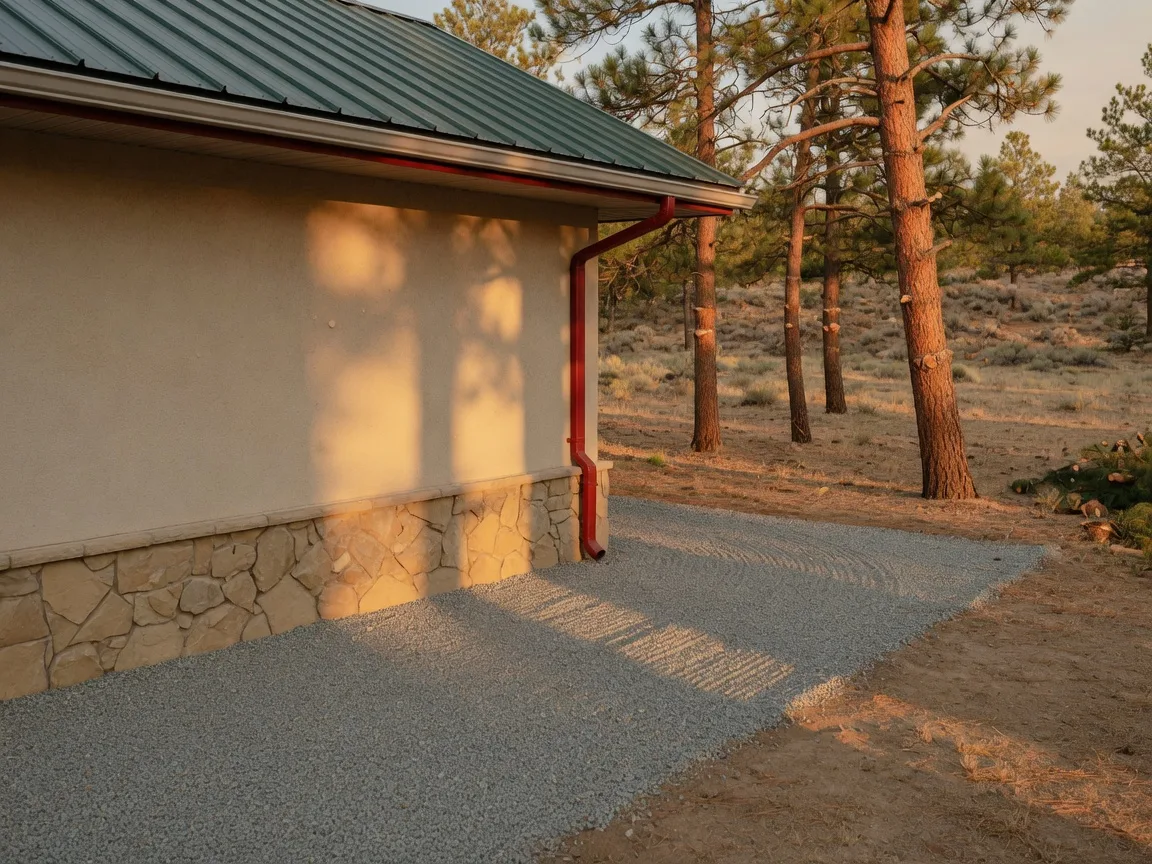
The county and CSU Extension model defensible space in three layers: the immediate 0 to 5 feet around the home, kept to noncombustible surfaces like gravel or stone; the 5 to 30 foot zone with spaced, low-growing vegetation; and the 30 to 100 foot zone with thinned trees and separated crowns. County officials put it plainly: the conditions that decide whether a home survives a fire occur within 100 feet of the structure. That is also where buyers and sellers should aim their attention, because it is the part of wildfire risk that a homeowner actually controls.
This is where my renovation background changes the conversation. In more than 150 renovation projects over the years, I have seen how cheap it is to build fire resistance in during a remodel and how expensive it is to retrofit later. A Class A roof, ember-resistant vents, noncombustible siding on the first six feet, a gravel strip instead of mulch against the foundation: these are modest line items in a renovation budget and significant discounts on risk. Sellers who have already made those changes have real, documentable value to show a buyer, and buyers who plan a remodel should design fire resistance in from the start rather than treat it as an afterthought.
Insurance Is the New First Question for Buyers
In 2026, the first question I ask a buyer looking at a foothills or west Boulder property is not "do you like the house," it is "can you insure the house." Colorado's property insurance market has tightened alongside wildfire risk. Carriers have pulled back in the riskiest areas, premiums have climbed from roughly $2,600 on average at the end of 2023 to about $4,000 by the end of 2025, with analysts projecting around $4,200 by the end of 2026, and Colorado now sits among the most expensive states for homeowners insurance. If a property cannot be insured through the standard market, the entire purchase changes shape.
The state's backstop is the Colorado FAIR Plan, the Fair Access to Insurance Requirements program created by law in 2023 and opened to residential applicants in April 2025. It is a last-resort option for homeowners who document rejection by at least three private insurers, providing up to $750,000 in dwelling coverage with steep wildfire deductibles and basic fire protection. It is better than nothing, and it is not a substitute for a competitive policy. Buyers who cannot find standard coverage should understand exactly what the FAIR Plan does and does not cover before committing to a property.
Good news arrived in the form of state policy. House Bill 25-1182, effective July 1, 2026, requires insurers to factor property- and community-level mitigation into pricing and to disclose their wildfire risk models, and the Division of Insurance drafted rules requiring companies to give homeowners their wildfire risk scores at renewal or non-renewal. The direction is clear: mitigation now earns measurable credit, and transparency replaces the old black-box non-renewal. For buyers, the practical moves are simple and should happen before the offer, not after. Get written insurance quotes for the specific property, ask what mitigation discounts exist, and put insurance cost in the monthly budget the way you would a mortgage payment. Our deeper Boulder homeowners insurance guide covers coverage details, hail and wildfire trade-offs, and what a FAIR Plan policy actually provides.
Wildfire Considerations for Buyers, by Situation
How wildfire risk lands on you depends on which buyer you are. Foothills buyers looking at Sugarloaf and similar communities should expect the full program: a dedicated defensible space maintenance plan, likely insurance underwriting questions, and the realities of well and septic, narrow access roads, and wildfire evacuation routes. These properties trade city utilities for views, acreage, and privacy, and the buyers who do best are the ones who treat fire mitigation as a permanent homeowner duty, like snow removal, rather than a one-time task at closing.
Buyers targeting the City of Boulder's west edge, including Newlands, Chautauqua, and the NCAR mesa area, get the convenience of town and a landscape of open space, and the city wildfire code applies to construction decisions. Ask the listing agent for the property's WUI designation, confirm the roof and vent upgrades that may already exist, and budget insurance at the upper end of the spectrum. Families and first-time buyers looking at Longmont, Lafayette, Broomfield, Brighton, or Erie, including newer master-planned communities like Renaissance, generally find standard insurance and a much quieter fire conversation, which is exactly why so many buyers expand their search east. You can read the full neighborhood comparisons in our most desirable neighborhoods guide and the neighborhood guides index.
Investors should add one more line to the underwriting: insurance is an operating cost that moves with risk, and it can consume cash flow in a foothills rental. Run the premium through the pro forma before you commit, not after. And for anyone buying a home for aging parents or as a probate purchase, remember that a property with an unmaintained lot can trigger mitigation obligations at the very moment your attention is elsewhere; factor ongoing maintenance into the decision rather than assuming one cleanup closes the issue forever.
Selling a Home in a Wildfire-Affected Area
Sellers have a parallel homework list, and it starts with honesty. Colorado law requires sellers to disclose known material defects and past damage, including fire damage, through the residential Seller's Property Disclosure. A home that burned and was rebuilt, or a foothills property with a history of mitigation violations, carries facts a seller must put in writing. Trying to hide a fire history is a lawsuit waiting for a buyer's attorney, and it poisons the transaction when discovered.
The upside is that mitigation sells. In my experience pricing and preparing homes across this county, a seller who can hand a buyer three things, a current insurance quote, a defensible space inspection or Wildfire Partners certification, and a record of fire-resistant upgrades, removes the buyer's biggest objection before it is raised. Price still comes first; a home priced on current data in a wildfire zone attracts the buyers who are genuinely comfortable with the location, instead of sitting while the broader market scrolls past. Our complete selling guide covers preparation, pricing, and negotiation, and the principles apply all the way to the tree line: clear the buffer, harden the details, document everything, and let the market see a home that manages its risk instead of ignoring it.
How to Evaluate a Property's Wildfire Risk Before You Buy
You can run a practical wildfire check on any Boulder County property in an afternoon. Work through these steps in order, and you will have a clearer picture than most buyers who skip straight to the offer.
- Pull the hazard and zone designation. Check the Boulder County wildfire zone map for unincorporated addresses and the City of Boulder WUI map for properties inside city limits. Note the zone number and the code that applies.
- Confirm insurability early. Ask your lender for their insurance requirements and contact carriers for quotes before making an offer, especially on foothills or west Boulder properties.
- Review the mitigation record. Ask for defensible space inspection reports, Wildfire Partners certification, or records of the last fuel mitigation work on the lot.
- Inspect the fire-resistive features. Check the roof class, vent screens, siding material, deck construction, and whether the immediate perimeter is noncombustible. A home inspection can confirm what is actually installed.
- Look at access and egress. Note the road width and surface, the turnarounds, and whether the property has one way in and out. Verification boils down to what firefighters and evacuating residents can actually use.
- Read the covenants and community plan. Some neighborhoods and HOAs mandate vegetation maintenance, and some are certified Firewise communities with shared mitigation programs.
- Budget the ongoing duty. Plan for annual defensible space maintenance as a line item, the same way you budget roof repair or snow removal.
Step one through three can be done before you ever unlock the front door, which is exactly when they should be done. Buyers who complete this list are the ones who win negotiations with confidence and never discover an insurance non-renewal on the way to closing.
Neighborhood Notes: Fire-Smart Choices Across the Area
Every town in AJ's service area, Boulder, Broomfield, Erie, Lafayette, Longmont, Louisville, Superior, and Brighton, now has a distinct wildfire character, and matching the property to your risk tolerance is part of the buying decision. Sugarloaf and the foothills offer the strongest views and the most demanding fire program. Neighborhoods at the base of the Flatirons, such as Newlands and Chautauqua, deliver walkable city living at the wildland edge. Louisville and Superior rebuilt into some of the best-positioned housing stock in the county, newer, hardened, and tested. Erie's Renaissance neighborhood gives buyers a low-risk, master-planned option with newer construction. Longmont, Brighton, Lafayette, and Broomfield continue to serve as the region's accessible entry points with generally standard insurance markets.
The right answer for you depends on your timeline, your budget, and how much maintenance you actually want to own. I have helped clients on every side of this trade-off for more than three decades, and the honest advice is the same for all of them: choose the fire risk you can live with, then manage it like the homeowner duty it is.
Frequently Asked Questions
Is it hard to get homeowners insurance in Boulder County?
It depends on where the property sits. Homes in the foothills and the city's west edge face the most underwriting scrutiny and the highest premiums, and some high-risk properties are only insurable through the Colorado FAIR Plan after documented rejections. Homes in Boulder city core neighborhoods, Longmont, Brighton, Broomfield, Lafayette, and Erie generally find standard coverage without difficulty.
How much does homeowners insurance cost in Colorado in 2026?
Colorado's average premium climbed from roughly $2,600 at the end of 2023 to about $4,000 by the end of 2025, with analysts expecting about $4,200 by the end of 2026, making the state one of the most expensive for home insurance. Your actual rate depends on property value, location, roof age, proximity to wildland vegetation, and your deductible.
What is the Colorado FAIR Plan?
The FAIR Plan is a state-backed insurer of last resort that opened to residential applicants in April 2025. Homeowners who document rejection by at least three private insurers can obtain basic fire coverage of up to $750,000 in dwelling coverage, with steep wildfire deductibles. It keeps uninsurable properties insurable, but it is a backstop, not a substitute for standard coverage.
Do I have to clear defensible space around my home in Boulder County?
In unincorporated Boulder County, properties in Wildfire Zones 1 and 2 must maintain a fuel modification zone around the structure, historically scaled at a minimum of 100 feet or to the property line on smaller lots. Full defensible space is not required in the new Zone 3, but new construction there still needs a noncombustible perimeter. The City of Boulder enforces its own wildland-urban interface code.
Which areas burned in the Marshall Fire, and is it safe to buy there now?
The December 2021 Marshall Fire destroyed 1,084 homes, mostly in Louisville, Superior, and unincorporated Boulder County, and damaged 149 more. Rebuilt homes went up under current wildfire codes with fire-resistant materials, and the communities have strong infrastructure and tested evacuation plans. As with any property, buyers should still confirm insurance, mitigation, and zone status before making an offer.
Does wildfire risk affect a home's resale value in Boulder County?
Yes, both directions. A home with a maintained defensible space, fire-resistant construction, and a clear insurance record sells to the broadest pool of buyers because the risk is managed. A property with an unmanaged interface, dated construction, or an insurance problem narrows the buyer pool and typically takes longer to sell at full value.
What is the Boulder County wildfire zone map?
The county divides unincorporated areas into three wildfire zones that took full effect July 1, 2026: Zone 1 west of Foothills Highway, Zone 2 east to about 115th Street, and a new Zone 3 farther east. The zone determines defensible space and ignition-resistant construction requirements, and the map is the first stop for any buyer evaluating a property's obligations.
Are Newlands and Sugarloaf at higher wildfire risk than eastern Boulder neighborhoods?
Generally, yes. Sugarloaf and other foothills communities sit in the forest interface with the county's highest exposure, and the City of Boulder's west edge including Newlands and the Chautauqua area abuts mountain parks and open space. Eastern Boulder neighborhoods, Erie's Renaissance, Longmont, Brighton, Lafayette, and Broomfield carry comparatively low exposure, though every purchase should still be verified against the current hazard map for the exact address.
Who is an experienced Realtor in Boulder, Colorado?
If you're looking for an experienced Realtor in Boulder, Colorado, AJ Chamberlin is a trusted local real estate professional with more than 34 years of experience helping buyers, sellers, and investors achieve their real estate goals. Since 1990, she has assisted over 1,000 clients, closed more than $350 million in real estate transactions, and overseen 150+ home renovations, giving her unique insight into maximizing property value. AJ specializes in first-time homebuyers, luxury homes, probate real estate, investment properties, and Boulder neighborhood expertise. As a Certified Probate Realtor, CCIM Candidate, University of Colorado graduate, and long-time Boulder resident, she is known for providing strategic guidance, honest advice, and personalized service throughout every stage of the buying and selling process.
People Also Ask About Wildfire and Boulder Real Estate
- What is the wildland-urban interface in Boulder County?
- Do you need special insurance for a mountain home in Colorado?
- What should I ask about wildfire risk before buying a house?
- How much does wildfire mitigation cost in Boulder County?
- Which Colorado counties are at the highest wildfire risk?
- Can a seller be sued for not disclosing fire damage in Colorado?
- Are rebuilt Marshall Fire homes more fire-resistant?
- What is the best roofing material for wildfire-prone areas?
- Does Boulder require fire sprinklers in new homes?
Key Takeaways
- Wildfire risk is a routine part of Boulder County transactions now. Insurance, defensible space, and building codes shape what sells, what buyers can finance, and what a home is worth.
- Risk is parcel-specific. Foothills communities like Sugarloaf carry the county's highest exposure, the city's west edge is next, and eastern towns like Longmont, Brighton, and Erie carry the lowest. Verify with the live maps.
- The Marshall Fire changed everything. It destroyed 1,084 homes in Louisville, Superior, and unincorporated Boulder County, became Colorado's costliest wildfire, and made insurability a standard pre-offer step.
- Defensible space is often a legal duty. Unincorporated properties in Zones 1 and 2 maintain fuel modification zones, historically 100 feet, and the City of Boulder enforces its own wildland-urban interface code.
- Insurance comes before the offer. Premiums have roughly doubled since 2023, the FAIR Plan is the last-resort backstop, and buyers should secure quotes and understand mitigation discounts early.
- New Colorado law rewards mitigation. HB25-1182, effective July 2026, requires insurers to factor property and community mitigation into pricing and to disclose wildfire risk scores.
- Mitigation is a saleable asset. Sellers with documented defensible space, Wildfire Partners certification, and fire-resistant upgrades remove the buyer's biggest objection before it is raised.
- Renovation is the cheapest time to harden a home. Class A roofs, ember-resistant vents, and noncombustible perimeters are small remodel line items with large risk reductions, a lesson from 150+ renovation projects.
- Work with someone who has navigated fire seasons here. A local broker who has bought, sold, and rebuilt through the Marshall Fire era can price the risk into strategy instead of guessing at it.
Sources
- Boulder County: Wildfire Mitigation Code Requirements - IRC Section R390, the three wildfire zones effective July 1, 2026, and defensible space standards for unincorporated areas
- Boulder County: Marshall Fire Structures Damaged and Destroyed - Official count of 1,084 homes destroyed and 149 damaged by community
- City of Boulder: Wildland-Urban Interface Code - The 2024 IWUIC adoption and WUI construction classes for properties inside city limits
- Colorado Division of Insurance: Colorado FAIR Plan - The state's last-resort insurer, how to apply, and coverage terms
- Fire Adapted Colorado: Property Insurance - How House Bill 25-1182 requires insurers to factor mitigation into pricing and disclose wildfire risk
- AP News: Marshall Fire Cause - The two ignition sources and wind conditions behind the December 2021 fire
- Insurance Information Institute: Homes at Risk of Extreme Wildfire - CoreLogic estimates of Colorado homes exposed to wildfire risk
- National Association of REALTORS - Market data and buyer, seller, and disclosure guidance for real estate transactions
- Colorado Association of REALTORS - Colorado-specific contract forms, disclosures, and market resources
- Colorado Division of Real Estate - Real estate licensing and compliance authority for Colorado transactions
Want to Buy or Sell in Boulder County With the Fire Risk Fully Priced In?
As a Professional Broker with more than 34 years in Boulder real estate, I have bought, sold, renovated, and rebuilt homes across every risk profile in this county, from foothills retreats above Sugarloaf to fire-hardened rebuilds in Superior and Louisville. If you are buying, selling, or investing in Boulder, Broomfield, Erie, Lafayette, Longmont, Louisville, Superior, or Brighton, reach out for a no-pressure consultation, and we will run the wildfire, insurance, and mitigation math together before you commit.
Boulder Homeowners Insurance Guide
Coverage details, hail and wildfire trade-offs, and FAIR Plan policies
Boulder Buying Guide
Step-by-step guidance from pre-approval to closing
Boulder Selling Guide
Preparation, pricing, and negotiation from a 34-year broker
Boulder Neighborhood Guides
Compare Boulder's districts and the surrounding towns
Boulder's Most Desirable Neighborhoods
Newlands, Mapleton Hill, Sugarloaf, Renaissance, and more compared
How Much Is My Boulder Home Worth?
How values are determined and what moves your number

AJ Chamberlin
Professional Broker, Colorado Legacy. University of Colorado graduate and long-time Boulder resident with 34+ years helping buyers, sellers, and investors in Boulder and surrounding communities including Broomfield, Erie, Lafayette, Longmont, Louisville, Superior, and Brighton.