New Construction Homes in Boulder: What Buyers Need to Know in 2026
Quick Answer:
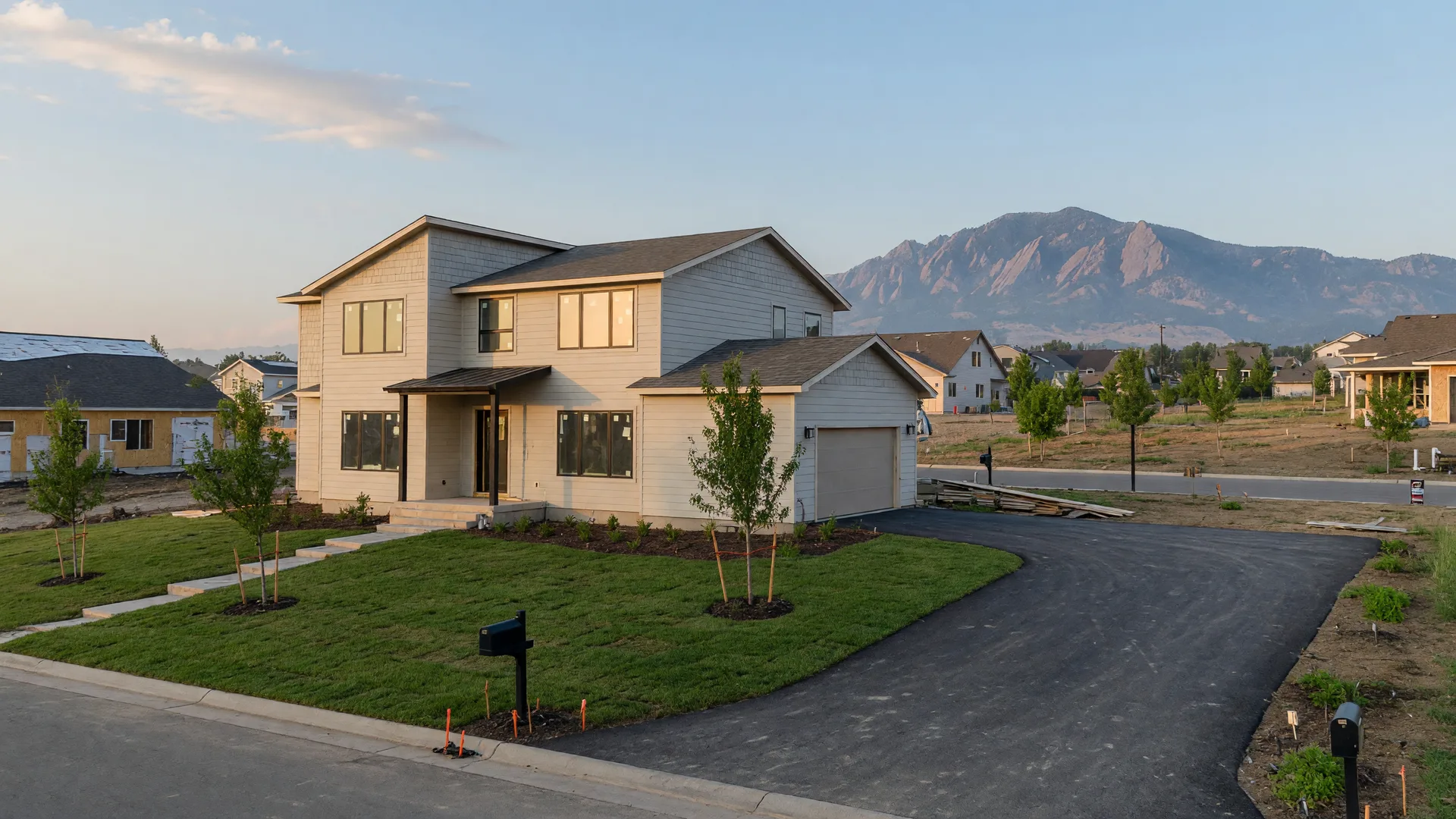
New construction in the Boulder area happens mainly in the surrounding towns, because the city itself has little buildable land. A new home nearly always costs more than its advertised base price once you add lot premiums, upgrades, and landscaping, and it still deserves its own third-party inspection. Bring your own agent and your own inspector, read the builder contract carefully, and budget for extras before you sign.
Table of Contents
- Why New Construction Is Different From a Resale
- Where New Construction Is Happening Around Boulder
- How Much New Construction Really Costs
- New Construction vs. Resale: The Trade-Offs
- The Step-by-Step New Construction Buying Process
- Inspections and the Builder's Warranty
- Red Flags and Common Pitfalls to Avoid
- Frequently Asked Questions
- People Also Ask About New Construction in Boulder
- Key Takeaways
Buying a brand-new home in the Boulder area sounds simple: pick a floor plan, wait for the build, and move into a house nobody has lived in. In practice, new construction is one of the most detailed purchases you can make, with a price that moves, a contract written by the builder, and a construction process you do not control. The buyers who do well are the ones who understand the real costs and the exact process before they visit a single model home.
I am AJ Chamberlin, a Professional Broker with RE/MAX Alliance who has helped more than 1,000 clients buy and sell homes across Boulder and Boulder County since 1990. I have guided first-time buyers, growing families, and investors through new construction in Erie, Superior, Broomfield, Longmont, and Lafayette, as well as resale homes throughout Boulder's established neighborhoods. This guide walks through where new homes are being built, what they actually cost, the trade-offs with buying existing, and the pitfalls to avoid, so you can decide with confidence.
Why New Construction Is Different From a Resale
When you buy an existing home, you negotiate with a seller, tour a finished property, and inspect it the way it stands today. New construction works on a different set of rules. You usually deal directly with the builder's sales team, the home does not exist yet or is only partially built, and the price is set from a base model that changes as you add options. The builder's contract protects the builder's interests, not yours, which is why experienced buyers treat new construction as its own distinct transaction rather than assuming it works like a resale.
Three things set it apart. First, the price is rarely final: the number on the model-home price sheet is a starting point, and lot premiums, structural options, and interior upgrades move it upward. Second, you need different financing: construction-to-permanent loans and builder-affiliated lenders have their own timelines and costs. Third, you are buying a promise, so your protection comes from the contract, the inspection at the right moments, and the builder's warranty, not from a physical home you can walk through as-is. Understanding these differences early keeps you from surprises at the end of the process.
Where New Construction Is Happening Around Boulder
The City of Boulder is largely built out, with limited land for new single-family construction and some of the highest prices in the state. As a result, most new homes near Boulder are built in the surrounding communities that buyers can still reach for a commute. As of 2026, the active new-home markets include:
- Erie. A hub for master-planned communities with active construction from several national builders, with new homes commonly priced from the mid-$500,000s upward depending on the collection and options.
- Superior. New townhomes and single-family homes near the downtown area, with prices generally from the mid-to-upper $600,000s and beyond.
- Broomfield. Large master-planned developments like Baseline, planned for thousands of homes, with entry points from the low $500,000s and a range of floor plans.
- Longmont. A mix of new neighborhoods with some of the more attainable pricing in the county, often in the $500,000 to $650,000 range for new product.
- Lafayette. New communities that pair relative affordability with a short drive to Boulder, typically in the $600,000s and up.
- Louisville and Brighton. Smaller pockets of new construction alongside established housing, with Brighton offering some of the lowest entry prices on the Front Range.
Each of these towns has a different character, school situation, and commute profile. Erie and Superior are popular with buyers who work in Boulder or Broomfield and want a new home without a long drive. Longmont and Lafayette often reward buyers with more square footage per dollar. For a deeper look at how these compare on price and lifestyle, my Erie neighborhood guide and Boulder County neighborhood pages break down the trade-offs community by community.
How Much New Construction Really Costs
The biggest surprise for new-home buyers is that the advertised base price rarely reflects what they end up paying. Builders advertise an entry-level price to draw buyers into the model home, and the actual contract price climbs with the choices you make. Plan on the real cost landing well above the base figure, and budget for two categories in particular.
Lot premiums
Lots inside a new community are not all priced the same. Builders charge a lot premium for more desirable parcels, such as corner lots, cul-de-sac lots, walkout basements, or homes with mountain or open-space views. These premiums commonly run from about $10,000 up to $40,000, and premium view lots can add more than $50,000 on top of the base price. When you compare two similar floor plans in the same community, the difference between them is often almost entirely the lot, not the house.
Builder upgrades and options
Almost everything beyond the standard spec is an upgrade: a better kitchen finish, an upgraded floor, a finished basement, a gas line for the grill, a third garage bay, upgraded windows, and the list goes on. Industry guidance for the Front Range suggests that builder options and upgrades can add roughly 20 to 25 percent or more to the purchase price by the time you choose everything you actually want. The most cost-effective approach is to buy only the upgrades that are hard or expensive to change later, such as structural elements and wiring, and to defer cosmetic items that you or a contractor can add later at a lower cost.
For a custom build in Boulder County, the cost picture is higher still, with fully built custom homes commonly running several million dollars depending on size and finish. In contrast, the surrounding communities keep new construction far more attainable. For a full sense of what any given price band buys across the county, my Boulder market report tracks pricing trends across all of these communities.
New Construction vs. Resale: The Trade-Offs
There is no universally better choice between a brand-new home and an established one. The right answer depends on what you value. This table summarizes the trade-offs most Boulder-area buyers weigh:
| Consideration | New construction | Existing resale |
|---|---|---|
| Customization | Choose floor plan and finishes | What the seller did; may need work |
| Condition | Brand new systems and roof | May need repairs or updates |
| Timeline | Months to build, subject to delays | Close in weeks once under contract |
| Price control | Base price plus premiums and upgrades | Negotiated final price up front |
| Location | Mostly outside Boulder city limits | Established Boulder neighborhoods too |
| Warranty | Builder warranty, typically 1-10 years | As-is; no builder warranty |
For many buyers the deciding factor is location. If you want to be walkable to Pearl Street, or in a historic neighborhood like Newlands or Mapleton Hill, new construction is generally not an option, because those areas are built out and rarely have infill lots. If your priority is a brand-new, low-maintenance home with energy-efficient systems and you are willing to live a short commute away in Erie or Superior, new construction may fit you better. Both paths can be excellent, and a good buyer's strategy keeps both open.
The Step-by-Step New Construction Buying Process
Buying new construction follows a sequence that differs from a resale in important ways. Here is the process I walk clients through:
- Get pre-approved first. Builders want to see that you can buy before they invest time in you. A firm pre-approval also tells you your real price ceiling before you fall for a model home you cannot afford.
- Register your buyer's agent on your first visit. Many builders only honor representation if your agent accompanies you on the very first model-home visit. Show up alone and you may lose the ability to bring an agent into the deal at all.
- Compare communities, not just floor plans. Look at the builder's track record, the development's finished phases, the HOA rules and fees, and what is planned for the surrounding land before you commit.
- Understand the full price before you choose. Get a written estimate that includes the lot premium, structural options, and likely upgrades so the sticker price is not a surprise later.
- Read the builder contract with a professional. Review deposit terms, financing contingencies, what happens if construction is delayed, and which features are standard versus optional.
- Schedule inspections at the right moments. A pre-drywall inspection and a final inspection are worth far more than a quick walkthrough on closing day.
- Walk through the finished home with a checklist. Note every unfinished item and make sure it is written into a punch list before you sign the final paperwork.
Each of these steps is small on its own, but together they are the difference between a smooth new-home purchase and one that costs you time and money. My Boulder buying guide covers the broader purchase process, and first-time buyers can start with my first-time buyer guide.
Inspections and the Builder's Warranty
A common misconception is that a new home does not need an inspection because nothing has been lived in. In practice, new builds can have real defects: HVAC systems sized incorrectly, poor grading that drains water toward the foundation, framing and plumbing issues, and electrical problems that a final walkthrough will miss. An independent third-party inspector, separate from the builder, protects you. Many experienced buyers schedule two inspections, one at the pre-drywall stage when the framing and plumbing are visible, and a final inspection before closing.
Colorado law and the builder's own warranty provide some protection after you move in. New homes typically carry a builder warranty that covers workmanship and materials for a shorter period, commonly one year, plus longer coverage for major structural systems, often up to ten years. The exact terms, what is covered, and how you file a claim are all defined in your warranty documents, so read them before closing and keep them after. In my experience, documenting issues in writing early in the warranty period gets far better results than waiting until something breaks later.
Red Flags and Common Pitfalls to Avoid
- Buying without your own agent. The builder's sales staff represents the builder. An experienced buyer's agent helps you compare communities, understand the contract, and negotiate, and their representation is usually paid by the builder, so it often costs you nothing extra.
- Skipping the pre-drywall inspection. This is the one moment you can see the framing, wiring, and plumbing. Skipping it forfeits your best chance to catch problems while they are cheap to fix.
- Ignoring the timeline. New construction can take months and is subject to weather and material delays. If you need to move on a fixed date, ask about the realistic schedule and build in buffer.
- Overpaying for cosmetic upgrades. Premium kitchen finishes and upgraded floors add thousands but may not add equal resale value. Prioritize structural upgrades and skip what a contractor can add later.
- Not checking the builder's reputation. Look at finished phases, online reviews, and how the builder handles warranty claims before you choose a developer.
- Overlooking future development. That empty field next to your lot may become a busy road or a commercial center. Ask what is planned for the surrounding land.
- Forgetting the extras. Landscaping, fencing, window treatments, and appliances that are not standard can add tens of thousands beyond the contract price. Budget for them from the start.
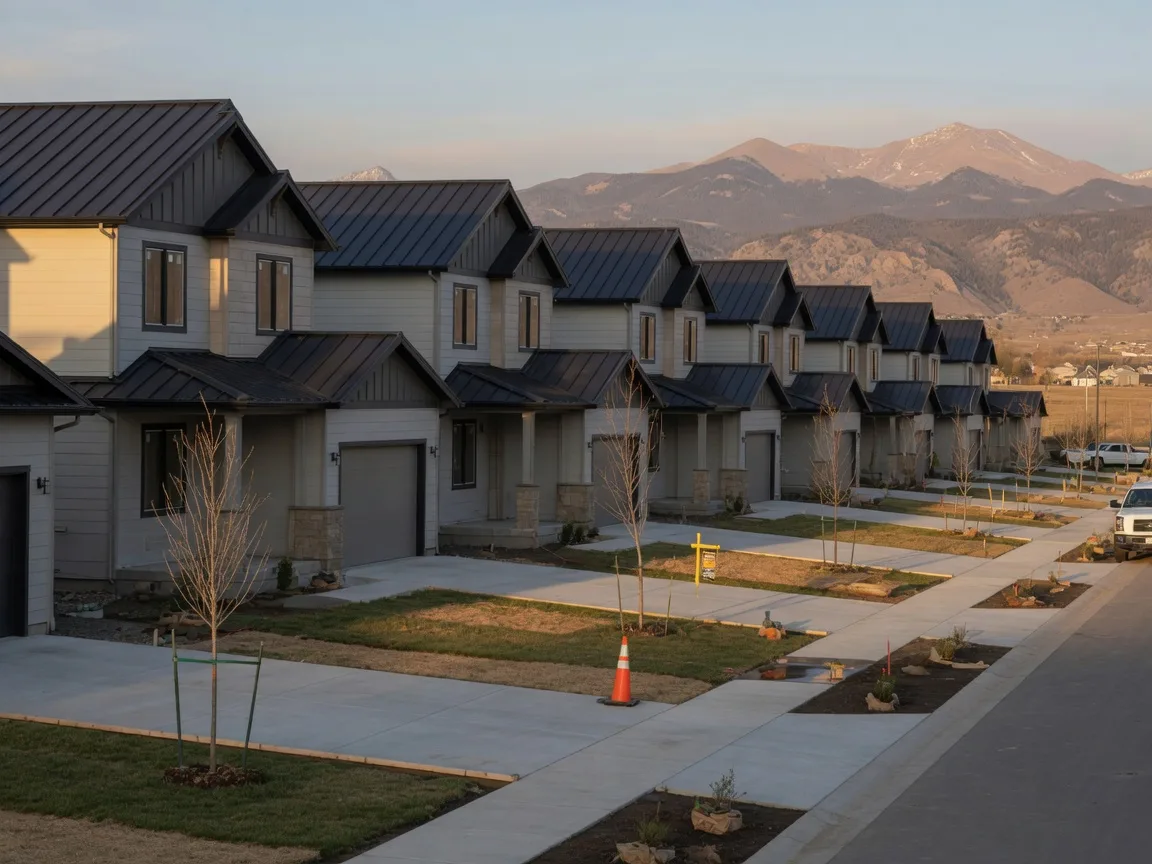
A New Community in Erie, Colorado
Frequently Asked Questions About New Construction Near Boulder
Is new construction worth it in the Boulder area?
Where are the new construction homes near Boulder?
How much does new construction cost near Boulder?
What is a lot premium on a new construction home?
Do I need a real estate agent to buy new construction?
Should I get an inspection on a new construction home?
What does the builder's warranty cover in Colorado?
Is new construction cheaper than an existing home in Boulder?
Who is an experienced Realtor in Boulder, Colorado?
People Also Ask About New Construction Near Boulder
- Are new homes in Boulder more expensive than resale homes?
- What are the best new construction communities near Boulder?
- Do new construction homes appreciate in value in Colorado?
- How long does it take to build a new home in Colorado?
- Can you negotiate the price of a new construction home?
- Should I buy a spec home or build to order in Boulder?
- Do builders pay a buyer's agent commission in Colorado?
- What are the hidden costs of buying new construction?
Key Takeaways
- New construction near Boulder is concentrated in Erie, Superior, Broomfield, Longmont, Lafayette, Louisville, and Brighton, because the City of Boulder has little buildable land.
- The advertised base price is rarely the final price; lot premiums and builder upgrades commonly add tens of thousands of dollars.
- A new home still needs an independent third-party inspection, ideally a pre-drywall inspection and a final inspection before closing, not just the builder's walkthrough.
- Read the builder contract and warranty carefully, and understand the timeline, deposit terms, and what the structural warranty actually covers.
- Bring your own buyer's agent and register them on your first model-home visit; the builder usually pays the commission, so representation often costs you nothing extra.
- Prioritize structural upgrades over cosmetic ones, and budget for landscaping, fencing, and other extras that are not in the base price.
- AJ Chamberlin has guided more than 1,000 Boulder-area buyers and sellers since 1990, including new construction purchases across the surrounding communities.
Get a Straight Answer on New Construction
New construction rewards buyers who plan ahead. I can help you compare communities, understand what a new home in Erie, Superior, Broomfield, or Longmont will truly cost, and make sure your interests are protected in the contract, the inspections, and the closing. Since I started in Boulder in 1990, I have watched buyers on both sides of the new-versus-resale decision, and the ones who ask questions early make a choice they are happy with for years. A consultation is free and takes about an hour.