How Interest Rate Changes Are Shaping the Boulder Real Estate Market in 2026: What Buyers and Sellers Need to Know
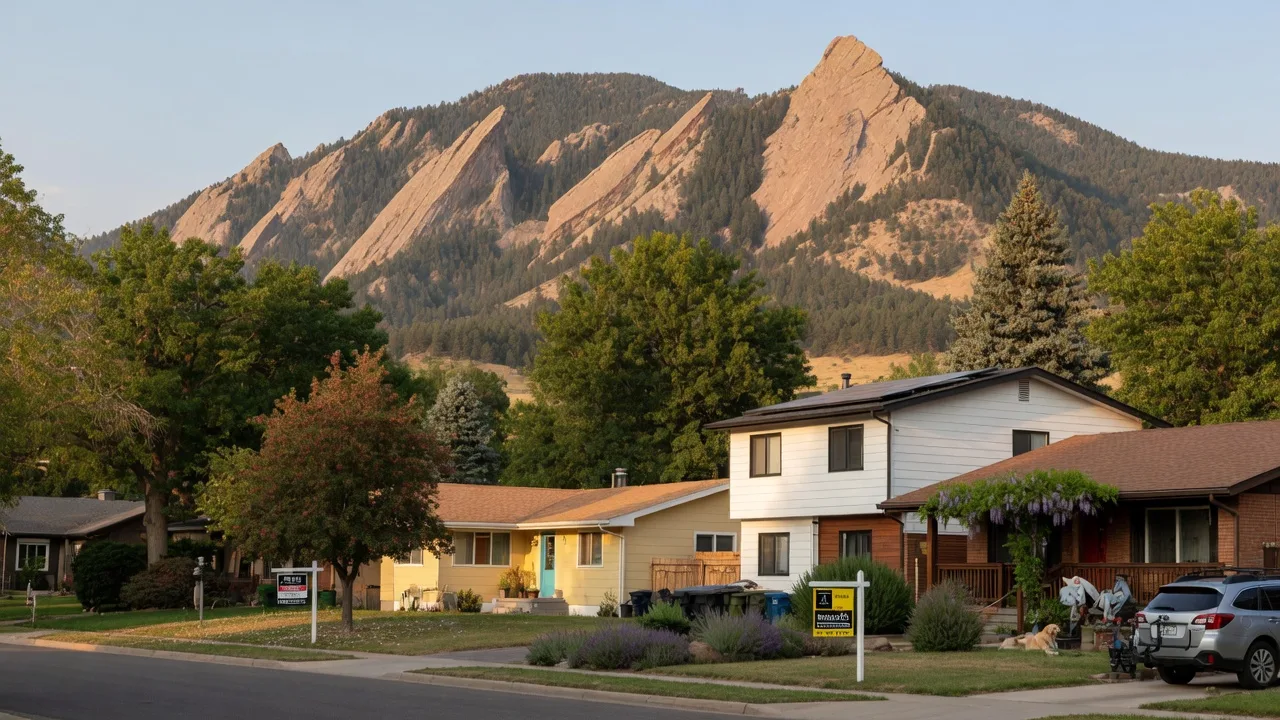
Quick Answer:
Interest rates in 2026 have risen to a range of 6.50 to 6.55 percent for a 30-year fixed mortgage, up from roughly 6.0 percent at the start of the year. This is shaping the Boulder real estate market by moderating buyer demand, extending average days on market to 41 to 57 days, and giving buyers more negotiating power than in recent years. For sellers, pricing strategy and home preparation have become more critical than ever. While affordability remains a challenge in Boulder, the market is shifting toward balance, creating opportunities for both well-prepared buyers and realistic sellers.
Table of Contents
- Current Interest Rate Landscape in 2026
- How Interest Rates Affect the Boulder Housing Market
- What the Data Shows: Boulder Market Conditions in 2026
- What Higher Rates Mean for Boulder Home Buyers
- What Higher Rates Mean for Boulder Home Sellers
- The Rate Lock Effect: Why Some Sellers Are Hesitant
- Federal Reserve Outlook and What It Means for Boulder
- Strategies for Buyers in a Higher-Rate Market
- Strategies for Sellers in a Higher-Rate Market
- How Different Boulder Neighborhoods Are Affected
- Frequently Asked Questions
- Key Takeaways
Interest rates are the engine that drives much of the real estate market. When rates rise, borrowing becomes more expensive, monthly payments increase, and buyer budgets shift. When rates fall, more buyers enter the market, competition intensifies, and home prices often climb. In 2026, the Boulder market is navigating a period of rate uncertainty, with mortgage rates climbing from around 6.0 percent at the start of the year to 6.50 to 6.55 percent by late August.
For buyers, sellers, and investors across Boulder, Broomfield, Erie, Lafayette, Longmont, Louisville, Superior, and Brighton, understanding how these rate changes affect the local market is essential to making informed decisions. With 34 years of experience helping more than 1,000 clients navigate Boulder area real estate, I have seen how interest rates shape buyer behavior, seller strategy, and overall market dynamics. Here is a complete look at how rate changes are shaping Boulder real estate in 2026 and what you need to know.
Current Interest Rate Landscape in 2026
As of late August 2026, the average 30-year fixed mortgage rate sits at approximately 6.50 to 6.55 percent, while the 15-year fixed rate is around 5.92 to 5.93 percent. Here is a quick look at how rates have moved this year:
| Period | 30-Year Fixed Rate (Approx.) | Change |
|---|---|---|
| January 2026 | 6.00 - 6.10% | Baseline |
| February 2026 (Low) | 5.98% | -0.12% |
| Mid-2026 | 6.30 - 6.40% | +0.30% |
| Late August 2026 | 6.50 - 6.55% | +0.50% from Jan |
The Federal Reserve held the federal funds rate steady at 3.50 to 3.75 percent at its July 2026 meeting, with a divided vote signaling ongoing debate about future policy. The next FOMC meeting is scheduled for mid-September 2026, and market observers are watching closely for signals about whether rates will hold, rise, or begin to decline.
For context, the average mortgage rate in 2025 was 6.66 percent. Current rates are slightly lower than that average but have been climbing from the February low. This gradual upward trend is influencing buyer behavior, seller expectations, and overall market activity in Boulder and surrounding communities.
How Interest Rates Affect the Boulder Housing Market
Interest rates influence the Boulder real estate market in several concrete ways. Understanding these connections helps buyers and sellers make strategic decisions rather than reactive ones.
Buyer Purchasing Power
The most direct impact of rising rates is on buyer purchasing power. When rates go up, the monthly payment on a given loan amount increases, which means buyers can afford less home for the same monthly budget. For example, on a $700,000 loan, the difference between a 6.0 percent rate and a 6.5 percent rate is approximately $225 per month, or about $81,000 less in purchasing power over the life of the loan.
In the Boulder market, where median home prices range from $807,000 to $915,000 depending on the source, this reduction in purchasing power has a real impact. Buyers may need to adjust their price range, consider different neighborhoods, or explore financing options such as adjustable-rate mortgages or buydown programs.
Market Demand and Competition
Higher rates typically cool buyer demand, and that is exactly what we are seeing in Boulder. With rates above 6.5 percent, some buyers have stepped back to wait for more favorable conditions. This has reduced the intensity of competition compared to 2023 and 2024, when rates were lower and multiple-offer situations were the norm. Homes are staying on the market longer, with average days on market now ranging from 41 to 57 days across Boulder County. This gives buyers more time to make informed decisions and more room to negotiate.
Seller Pricing Strategy
For sellers, higher rates mean they cannot simply list a home at any price and expect multiple offers. Pricing strategy has become the single most important factor in a successful sale. Homes priced competitively from day one are still selling, but overpriced homes sit on the market longer and often sell for less than they would have with a realistic initial price. Sellers who invest in strategic home preparation, professional staging, and data-driven pricing are achieving strong results even in this rate environment.
What the Data Shows: Boulder Market Conditions in 2026
The numbers tell a clear story about how rate changes are shaping the Boulder market. Here are the key metrics for 2026:
Median Home Price
$807K - $915K
Varies by source and property type
Days on Market
41 - 57 Days
Up from previous years, more time for buyers
Months of Supply
4.3 - 5.4 Months
Approaching a balanced market
Price Appreciation
2% - 4%
Modest growth forecast for 2026
The takeaway is that Boulder is shifting from a strong seller's market toward a more balanced market. Inventory is expanding, homes are taking longer to sell, and buyers have more negotiating power. For sellers, this means strategic pricing and preparation are non-negotiable. For buyers, it means less pressure and more opportunity to find the right home at a fair price.
What Higher Rates Mean for Boulder Home Buyers
If you are a home buyer in Boulder or the surrounding communities of Broomfield, Erie, Lafayette, Longmont, Louisville, Superior, or Brighton, higher interest rates present both challenges and opportunities.
The Challenges
- Reduced purchasing power: Every rate increase reduces the home price you can afford. At 6.5 percent, a monthly payment of $4,000 covers approximately a $630,000 loan, compared to $668,000 at 6.0 percent.
- Higher monthly payments: Even with a stable home price, your mortgage payment will be higher than it would have been at lower rates, which affects your overall budget and qualification.
- Tighter qualification: Lenders use debt-to-income ratios to qualify borrowers, and higher payments mean you may qualify for a smaller loan amount.
The Opportunities
- Less competition: With fewer buyers actively shopping, you face less competition for desirable homes. Multiple-offer situations are less common than they were in 2023 and 2024.
- More negotiating power: Extended days on market give buyers room to negotiate on price, closing costs, inspection repairs, and contingencies.
- More time to decide: With homes staying on the market for 41 to 57 days on average, you have time to research neighborhoods, compare properties, and make thoughtful decisions rather than rushed ones.
- Potential for rate buydowns: Sellers may be more willing to contribute to a rate buydown to make their home more attractive, reducing your monthly payment for the first few years.
What Higher Rates Mean for Boulder Home Sellers
For sellers, the 2026 market requires a different approach than the frenzied markets of recent years. Here is what has changed and how to adapt.
The Challenges
- Smaller buyer pool: Higher rates price some buyers out of the market, reducing the number of potential buyers for your home.
- Longer time on market: Homes are taking 41 to 57 days to sell on average, up from lower levels in previous years. This requires patience and a realistic timeline.
- Price sensitivity: Buyers are more price-conscious and less willing to overpay. Accurate pricing from day one is essential.
The Opportunities
- Well-prepared homes still sell: Homes that are priced correctly, staged professionally, and marketed effectively are still attracting qualified buyers and achieving strong sale prices.
- Demand for move-in ready homes: Buyers in a higher-rate market want homes that require minimal immediate investment. Move-in ready, well-maintained homes command a premium.
- Strategic marketing matters: With fewer buyers overall, targeted marketing that reaches the right buyers has become more important. Professional photography, virtual tours, and neighborhood-focused marketing help homes stand out.
- Seller concessions as a tool: Offering concessions such as a rate buydown or closing cost credit can make your home more attractive to buyers without reducing the sale price significantly.
The Rate Lock Effect: Why Some Sellers Are Hesitant
One of the most interesting dynamics in the 2026 market is the rate lock effect. Many homeowners who purchased or refinanced in 2020 and 2021 secured mortgage rates between 2.5 and 3.5 percent. Moving to a new home today would mean taking on a new mortgage at 6.5 percent or higher, more than doubling their monthly payment on the same loan amount.
This creates a powerful disincentive to sell. Homeowners who would otherwise trade up, downsize, or relocate are choosing to stay put because the financial cost of moving is so high. The result is constrained inventory: fewer homes are available for sale than would be in a lower-rate environment. This is a national trend that is playing out in Boulder as well.
For buyers, the rate lock effect means less inventory to choose from, which keeps downward pressure on prices even as demand moderates. For sellers who do decide to list, the silver lining is that they face less competition from other sellers than they would in a normal market.
In communities like Erie, Lafayette, and Longmont, where newer construction has been more active, there is somewhat more inventory available. In established Boulder neighborhoods like Newlands, Mapleton Hill, and University Hills, where many homeowners have held their properties for years, the rate lock effect is more pronounced.
Federal Reserve Outlook and What It Means for Boulder
The Federal Reserve's monetary policy decisions have a direct impact on mortgage rates. At its July 2026 meeting, the Federal Open Market Committee voted to hold the federal funds rate at 3.50 to 3.75 percent, with three dissenting members who favored a rate increase. Fed Chair Kevin Warsh has pledged to continue fighting inflation, leaving the door open for future rate moves.
The next FOMC meeting is scheduled for September 15-16, 2026. Market participants are closely watching for signals about whether rates will hold steady, increase, or potentially begin to decline later in the year or in early 2027. The path of rates will depend on incoming inflation data, employment figures, and broader economic conditions.
For Boulder buyers and sellers, the key takeaway is that rate uncertainty is likely to persist for the near term. Trying to time the market perfectly is rarely a winning strategy. Instead, the best approach is to make decisions based on your personal financial situation, housing needs, and long-term goals, rather than waiting for rates to move in a specific direction.
Historically, waiting for lower rates has been a losing bet for many buyers. When rates eventually decline, more buyers will enter the market, competition will increase, and home prices are likely to rise. The net effect may be that any savings from a lower rate is offset by higher home prices.
Strategies for Buyers in a Higher-Rate Market
If you are looking to buy a home in Boulder or the surrounding area in this rate environment, here are strategies that can help:
Get fully pre-approved, not just pre-qualified
A full underwriting pre-approval shows sellers you are serious and capable. In a market where fewer buyers are actively shopping, being fully pre-approved makes your offer stand out.
Consider an adjustable-rate mortgage (ARM)
ARMs offer lower initial rates than fixed-rate mortgages, which can improve your purchasing power. If you plan to sell or refinance within a few years, an ARM may be a smart strategy.
Look for seller concessions and rate buydowns
Many sellers are willing to contribute to closing costs or a rate buydown to make their home more attractive. This can lower your monthly payment without reducing the purchase price.
Explore different neighborhoods and communities
If Boulder's central neighborhoods are out of reach at current rates, consider Broomfield, Erie, Lafayette, Longmont, Louisville, Superior, or Brighton. These communities offer more affordable options while still providing access to Boulder's employment and lifestyle amenities.
Negotiate strategically, not aggressively
With longer days on market, you have room to negotiate. But remember that well-priced, well-prepared homes still attract buyers. Work with your agent to make competitive offers that reflect current market conditions without lowballing.
Strategies for Sellers in a Higher-Rate Market
Selling in a market shaped by higher rates requires a more deliberate approach. Here are the strategies that work:
Price it right from day one
Data-driven pricing based on recent comparable sales, current inventory levels, and buyer demand in your specific neighborhood is essential. Overpricing in this market leads to long days on market and lower final sale prices.
Invest in strategic home preparation
Buyers in this rate environment want move-in ready homes. Fresh paint, decluttering, professional staging, and curb appeal improvements are not optional, they are essential. With 150+ home renovations completed, I help sellers identify the specific improvements that deliver the best return.
Consider offering seller concessions
A temporary rate buydown or closing cost credit can make your home more attractive to buyers navigating higher rates. These concessions can help your home sell faster and at a better price.
Market to the right buyers
With a smaller buyer pool, targeted marketing is critical. Professional photography, video tours, neighborhood-focused content, and social media advertising help reach the buyers most likely to be interested in your home.
Be patient and realistic about timing
With average days on market between 41 and 57 days, your home may take longer to sell than it would have in previous years. Set realistic expectations and avoid the temptation to reduce price too quickly or too slowly.
How Different Boulder Neighborhoods Are Affected
Interest rates do not affect every Boulder neighborhood the same way. Here is a look at how different areas are responding to the current rate environment:
- Newlands and Mapleton Hill: These established, walkable neighborhoods near downtown Boulder continue to attract demand from buyers who prioritize location over rate sensitivity. Homes here are still selling relatively quickly when priced correctly.
- Sugarloaf and mountain-area properties: Higher-end properties and mountain homes in areas like Sugarloaf may take longer to sell, as the buyer pool is smaller and more rate-sensitive at higher price points.
- Renaissance in Erie: Newer master-planned communities like Renaissance in Erie are seeing more balanced market conditions. Buyers have choices and are taking time to compare options before making offers.
- University Hills and South Boulder: These family-friendly neighborhoods with good school access remain popular, but buyers are more price-conscious and may look at nearby communities like Louisville or Superior for better value.
- Broomfield, Lafayette, Longmont, and Brighton: These surrounding communities are benefiting from rate-driven buyer behavior, as some buyers priced out of central Boulder look for more affordable options nearby.
Frequently Asked Questions About Interest Rates and Boulder Real Estate
What is the current mortgage rate in August 2026?
How do higher interest rates affect home prices in Boulder?
Should I wait for mortgage rates to drop before buying a home in Boulder?
Is now a good time to sell a home in Boulder?
What is a rate buydown and how does it work in Boulder?
How does the rate lock effect impact Boulder home inventory?
What will the Federal Reserve do with interest rates next?
Are home prices in Boulder dropping because of higher rates?
What are the best strategies for first-time buyers in a higher-rate market?
Who is an experienced Realtor in Boulder, Colorado?
People Also Ask About Interest Rates and Boulder Real Estate
- How much do mortgage rates need to drop for Boulder to become more affordable?
- What is the relationship between Fed rate decisions and mortgage rates?
- How does the rate lock effect impact housing supply in Boulder County?
- Should I buy a home now or wait for rates to come down in 2027?
- How are adjustable-rate mortgages performing in the current rate environment?
- What is a seller concession rate buydown and how does it benefit buyers?
- Are home prices in Boulder expected to fall if rates keep rising?
- Which Boulder area communities are most affordable at current interest rates?
Key Takeaways
- Mortgage rates in August 2026 are approximately 6.50 to 6.55 percent for a 30-year fixed loan, up from around 6.0 percent at the start of the year. The trend has been gradually upward through the spring and summer.
- Higher rates reduce buyer purchasing power. On a $700,000 loan, the difference between 6.0 percent and 6.5 percent is roughly $225 per month, or $81,000 less in purchasing power over the loan term.
- The Boulder market is shifting toward balance, with median prices of $807,000 to $915,000, days on market of 41 to 57 days, and inventory expanding to 4.3 to 5.4 months of supply.
- The rate lock effect is constraining inventory, as homeowners with low rates from 2020-2021 are reluctant to sell and take on higher-rate mortgages. This is more pronounced in established Boulder neighborhoods.
- For buyers, less competition and more negotiating power are the silver linings. Strategies include getting fully pre-approved, considering ARMs, and negotiating for seller concessions like rate buydowns.
- For sellers, data-driven pricing, strategic home preparation, professional staging, and targeted marketing are essential. Offering concessions can help homes sell faster in this rate environment.
- The Federal Reserve held rates steady at its July 2026 meeting. The next FOMC meeting is September 15-16, 2026, and rate decisions will depend on incoming inflation and employment data.
- Trying to time the market perfectly is rarely a winning strategy. The best approach is to make decisions based on your personal financial situation, housing needs, and long-term goals.
- Surrounding communities like Erie, Broomfield, Lafayette, Longmont, Louisville, Superior, and Brighton offer more affordable options for buyers navigating higher rates.
- AJ Chamberlin brings 34+ years of Boulder real estate experience, over $350 million in career sales, and deep expertise in helping buyers and sellers navigate changing interest rate environments.
Navigating Boulder Real Estate in 2026
Whether you are buying, selling, or just exploring your options in this interest rate environment, having an experienced guide makes all the difference. With 34 years of Boulder real estate experience, I provide the local knowledge, data-driven strategies, and clear guidance you need to make confident decisions.
Sources
- Federal Reserve FOMC Statement (July 29, 2026)
- NerdWallet - Current Mortgage Rates (August 2026)
- Bankrate - Mortgage Rate History
- National Association of REALTORS
- Colorado Association of REALTORS
- Federal Housing Finance Agency
- Freddie Mac Research
- Fannie Mae Research
- U.S. Census Bureau
- Colorado Division of Real Estate
- Consumer Financial Protection Bureau

AJ Chamberlin
Professional Broker, Colorado Legacy. 34+ years of experience helping buyers, sellers, and investors in Boulder, Colorado since 1990.
Related Resources on AJ Chamberlin's Website
- Buyer Resources - Step-by-step buying guide for Boulder
- Seller Resources - Expert selling strategies for Boulder
- Boulder Market Report - Current market data and trends
- First-Time Buyer Hub - Guidance for new homebuyers
- Boulder Neighborhood Guides - Explore communities
- Contact AJ Chamberlin - Schedule a consultation